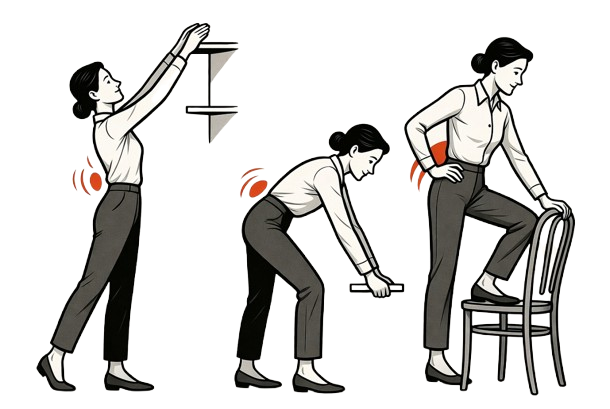
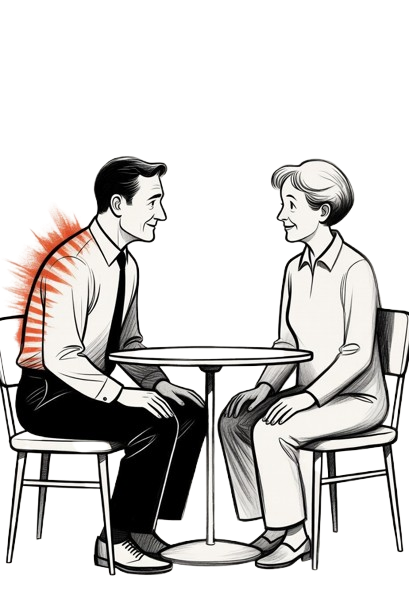
Most people who come to us with chronic back or neck pain have been living with it for longer than they should have. Not because they were negligent — but because the healthcare system and cultural messaging around pain both encourage waiting. "It will pass." "Everyone has some back pain." "Let's try rest and see how it goes." "We'll consider other options if it doesn't improve."
Sometimes pain does pass. Acute injuries resolve. Muscle strains heal. Inflammatory episodes settle. Waiting is appropriate for these presentations.
But for pain that persists beyond six to eight weeks — or that keeps returning despite apparent recovery — waiting is not neutral. It is actively making the problem harder to fix. Understanding why is important for anyone who has been managing rather than resolving their pain.
What Chronic Pain Does to the Nervous System
Pain that persists long enough undergoes a process called central sensitization — a change in how the nervous system processes pain signals. In acute pain, the signal is straightforward: tissue is damaged, the nerve reports it, the brain registers it. In chronic pain, the nervous system becomes increasingly sensitive over time — amplifying signals, lowering the threshold for pain perception, and eventually generating pain in the absence of ongoing tissue damage.
This is why chronic pain often feels disproportionate to the apparent injury, why it spreads beyond the original site, and why it becomes increasingly difficult to treat the longer it persists. The problem is no longer purely structural — it has become partly neurological. And neurological sensitization requires different and more comprehensive treatment than structural injury alone.
What Chronic Pain Does to the Muscles
Pain inhibits muscle activation. This is a protective mechanism — the body reduces loading on painful structures by inhibiting the muscles that would normally support them. In the short term, this is adaptive. In the long term, it creates a destructive cycle.
When the deep spinal stabilizers are chronically inhibited by pain, they weaken. Weakened stabilizers allow the spine to be loaded unevenly, creating more tissue stress, generating more pain, inhibiting more muscle activation. The cycle compounds over time. A client who presents after two years of chronic back pain has typically lost significant spinal stabilizer strength compared to their pre-pain baseline — and this strength deficit is now contributing as much to their pain as the original structural problem.
Rebuilding this strength is essential to breaking the cycle. But the longer the inhibition has persisted, the longer the rebuild takes.
Still living around your pain?
Let's change that. Call us and describe what you're dealing with — we'll tell you honestly if we can help.
Pain changes how people move. Protective movement patterns — altered gait, restricted range of motion, compensatory muscle recruitment — develop automatically in response to pain. These patterns reduce loading on the painful structure in the short term but create secondary problems over time.
A person who has been protecting their lower back for two years has developed movement patterns throughout their entire kinetic chain — altered hip mechanics, changed thoracic mobility, modified gait — that now need to be addressed as part of treatment. These compensatory patterns don't resolve spontaneously when the primary pain source is treated. They require specific attention.
The Compounding Effect of Delay
The practical implication of all this is straightforward: outcomes are consistently better with earlier intervention. Not marginally better — significantly better. Clients who present within three to six months of symptom onset typically achieve faster and more complete resolution than clients who present after one or two years of chronic pain.
This is not about blame. It is about biology. Earlier intervention means less central sensitization to unwind, less muscle inhibition to overcome, fewer compensatory patterns to address. The structural problem may be identical — but the total treatment burden is substantially lower.
If You Have Been Waiting — It Is Not Too Late
None of this means that chronic pain of long duration cannot be meaningfully improved. It can. Many of our most gratifying clinical outcomes involve clients who had been managing pain for years before seeking comprehensive treatment. What it means is that treatment requires more time and more comprehensive intervention than it would have earlier — and that expectations should be calibrated accordingly.
If you have been living with back or neck pain and managing rather than resolving it, call us. A thorough assessment will tell us exactly what we are dealing with — including how much of the problem is structural and how much reflects the changes that chronic pain produces in the nervous system and musculature. We will be direct about what a realistic course of care looks like and what outcomes are achievable.
Trent Shuford, LMT, Cert. MedX Tech.
Not sure if this is right for you?
We put together a straightforward guide to help you decide before you call.