Four Therapies That Reach the Tissue Layer Manual Work Cannot. Acoustic, photonic, and decompressive technology integrated into clinical care.
Some restrictions in the body sit at the cellular level — too small for hands to reach, too deep for movement to address. Piezowave shockwave, low level laser, full-body LED phototherapy, and mechanical decompression each address a specific tissue-level barrier that prevents full recovery. Used alongside MedX strengthening and manual therapy, they make the difference between symptoms reduced and structure restored.
What These Four Therapies Have in Common — and Why They Work Together
Each of these technologies addresses a different physical barrier to recovery. None of them replaces the structural strengthening that MedX provides or the soft-tissue work that hands deliver. They clear the way.
Piezowave
What it does. Acoustic shockwaves that break down scar tissue and calcifications which physically block circulation and movement.
Best when. The pain has not responded to soft-tissue work because the underlying tissue is calcified or fibrotic.
Low Level Laser
What it does. Specific wavelengths of light energy that stimulate mitochondrial activity at the cellular level — accelerating tissue repair and reducing inflammation.
Best when. Inflammation is keeping the nervous system in protective mode and limiting recovery between sessions.
Full-Body LED
What it does. Whole-body photobiomodulation that supports systemic anti-inflammatory response, improves circulation, and accelerates recovery between sessions.
Best when. Recovery is the bottleneck — clients are doing the work but not adapting fast enough between sessions.
Spinal Decompression
What it does. Controlled mechanical decompressive force that creates negative pressure in the disc space, drawing herniated material away from the nerve.
Best when. Nerve compression is the source of radiating pain and surgery has been suggested but not yet pursued.
Most clients integrate one or two of these into their core MedX and manual therapy program based on what the assessment reveals. None is used as a standalone treatment.
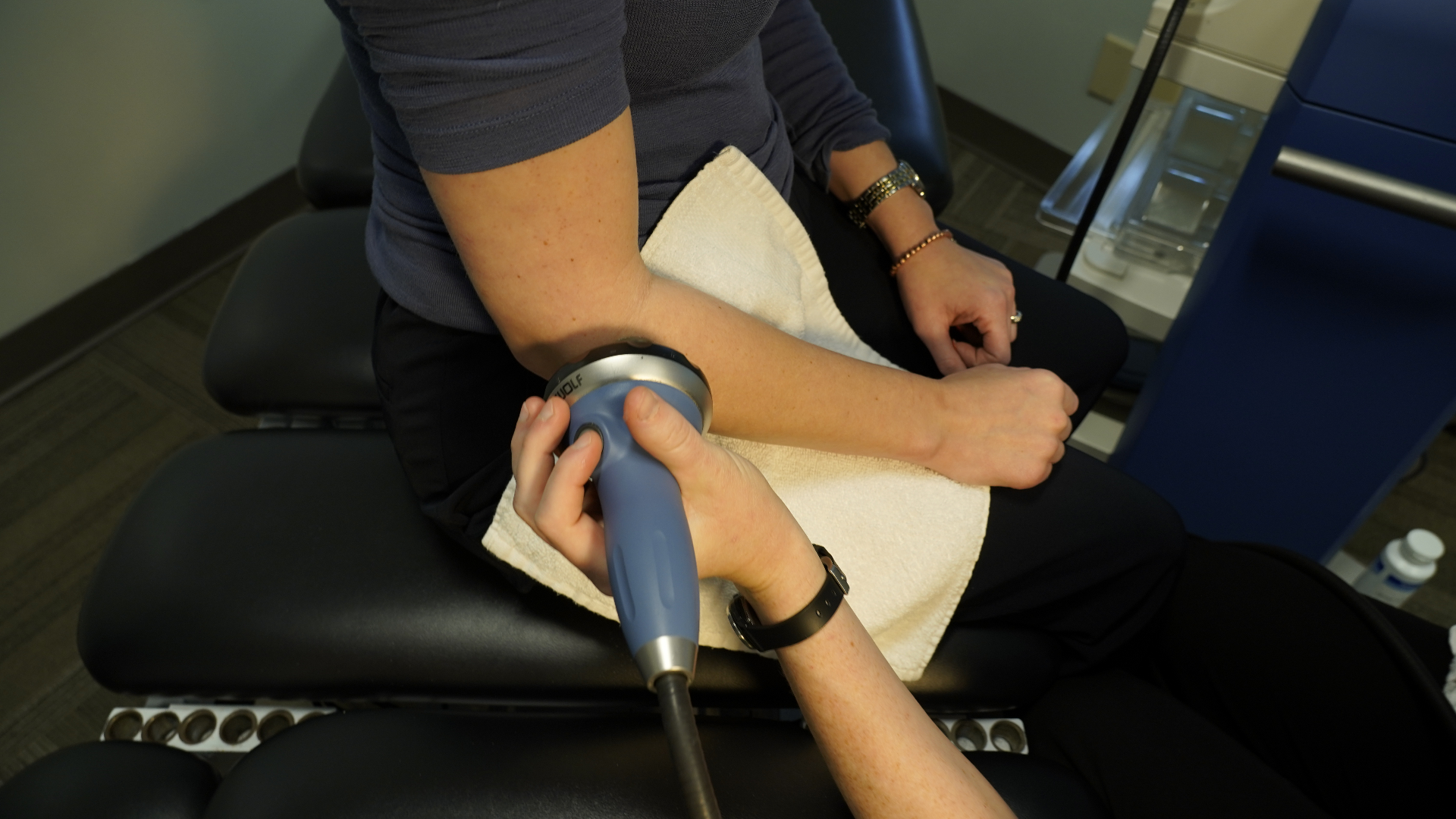
Piezowave Therapy
Breaks down scar tissue and calcifications that block healing
Piezowave delivers focused acoustic waves deep into soft tissue. It breaks down scar tissue and calcifications built up over years of compensation, stimulates collagen regeneration, and increases local circulation. For clients in chronic pain the surrounding tissues develop fibrosis and adhesions that limit both movement and healing response. Piezowave addresses this tissue-level barrier directly — accelerating recovery and reducing the pain that inhibits full effort during strengthening sessions.
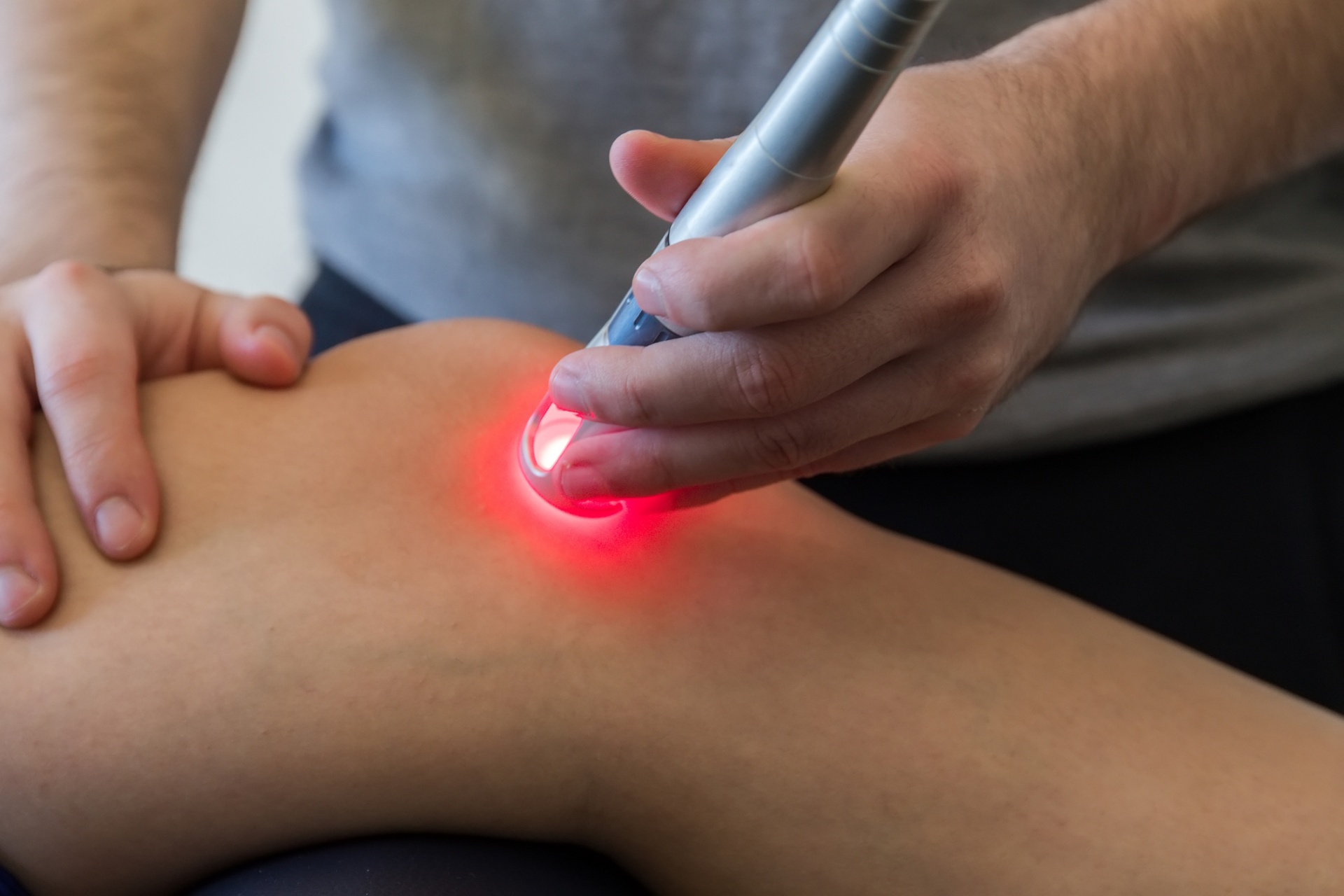
Low Level Laser Therapy
Reduces baseline inflammation that keeps the nervous system in pain
Therapeutic laser delivers specific wavelengths of light energy directly into injured or inflamed tissue. At the cellular level this stimulates mitochondrial activity, accelerates ATP production, reduces inflammatory cytokines, and promotes tissue repair. For spinal clients laser therapy reduces the baseline inflammation that contributes to persistent pain between sessions — allowing the nervous system to downregulate its pain response and making each strengthening session more productive.
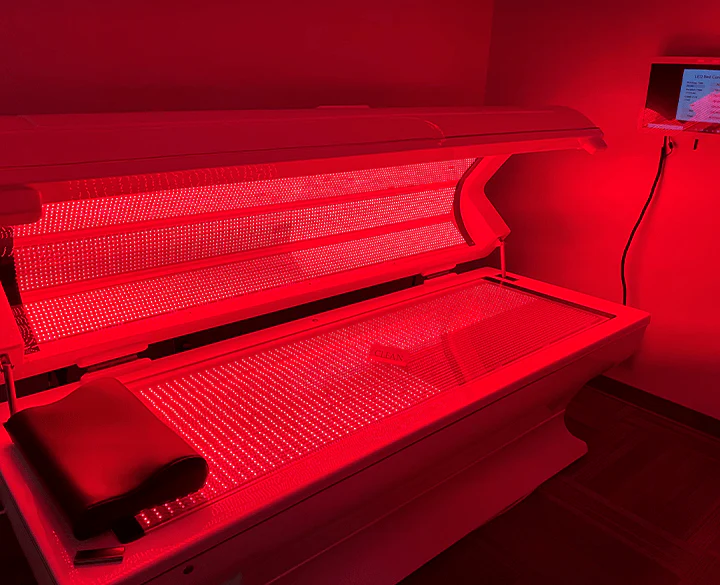
Red Light LED Table
Systemic recovery between sessions — less soreness, better adaptation
The red light LED table delivers low-level phototherapy across a broad surface area, supporting systemic anti-inflammatory response, improving circulation, and accelerating whole-body tissue recovery. Clients who use the LED table between sessions report less soreness, better sleep, and faster adaptation to progressive strengthening loads. Particularly valuable for clients with multiple pain sites or chronic systemic inflammation.
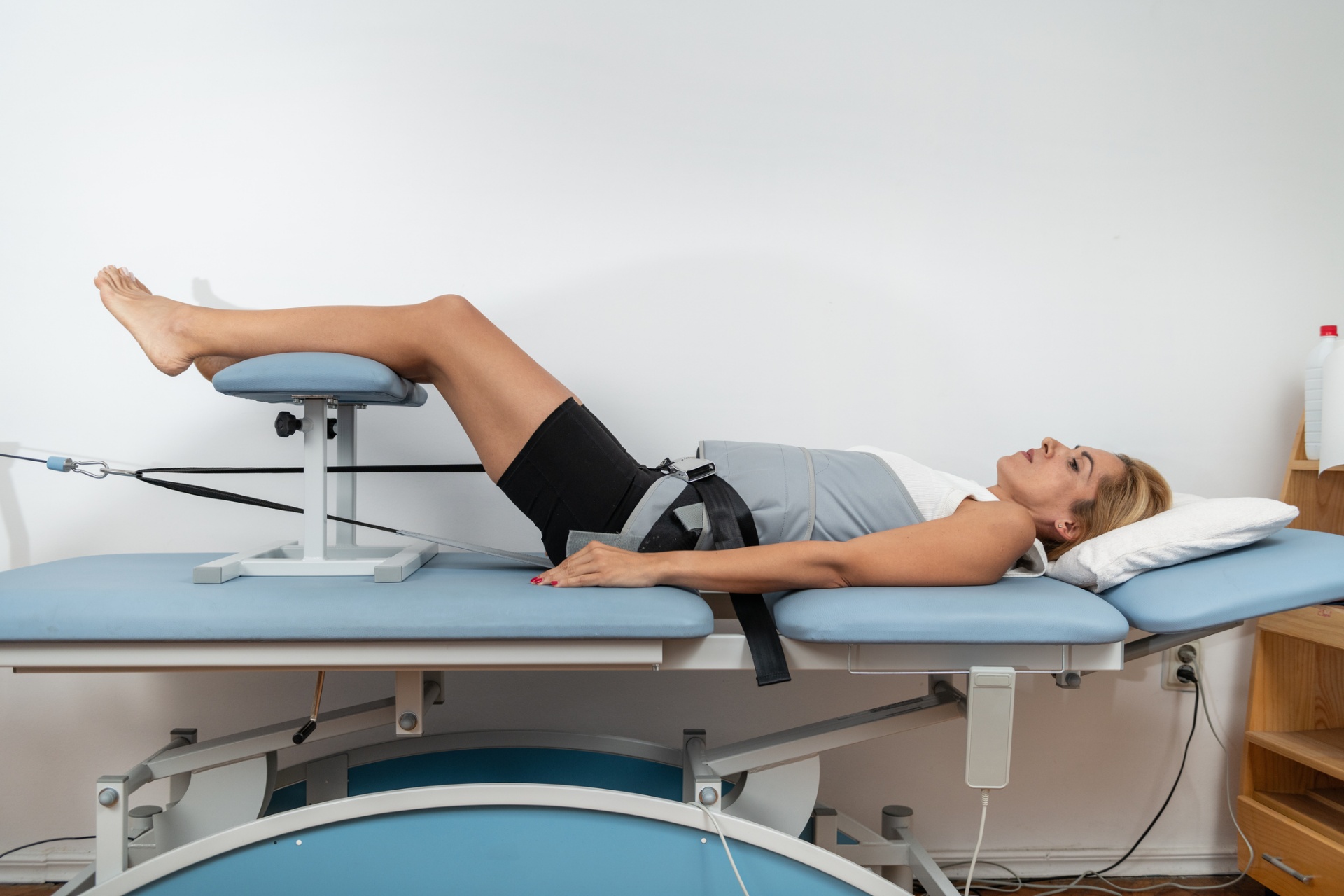
Spinal Traction
Mechanical decompression for disc and nerve pressure relief
Spinal traction applies a controlled decompressive force to the lumbar or cervical spine, creating negative pressure within the disc space. This draws bulging or herniated disc material away from the nerve root, reduces facet joint compression, and allows nutrient-rich fluid to reenter the disc. Used alongside strengthening and soft tissue work it addresses the mechanical compression component that contributes to radiating pain, numbness, and sciatica.
What an Integrated Session Actually Looks Like
Most clients are unsure how these technologies fit alongside the structural strengthening and manual therapy work. Here is the honest version of how a typical integrated session unfolds.
Assessment Identifies the Barrier
We assess where the structural deficit sits, where the soft-tissue restrictions are holding the pattern, and whether tissue-level barriers (calcifications, inflammation, disc compression) are blocking what strengthening alone could resolve. The advanced therapy choices follow from what the assessment reveals.
Targeted Application
If Piezowave is indicated, the targeted area receives 6-8 minutes of acoustic wave application per session. Laser therapy runs 10-15 minutes per area. Red light LED is a passive 20-minute systemic recovery application that often runs alongside the strengthening work. Decompression is 20-30 minutes on the table.
Integration With the Core Program
These therapies are not the program — they are what makes the program work. Each is sequenced alongside the MedX strengthening and the manual therapy in the rhythm that matches your specific recovery phase. Most clients use one or two; rarely all four.
None of these therapies require a long-term commitment. Most are used for a defined phase of treatment, then phased out as the underlying barrier resolves.
Three Different Barriers. Four Therapies. Three Recoveries.
How clients integrated these advanced therapies into their core programs.
"Windsurfing demands everything from your back and core, and after years of competing I had reached the point where the pain was deciding when I could sail. The MedX lumbar work rebuilt strength I did not know I had lost. The Piezowave addressed restrictions in places that had been chronic for years. Stamina is up, pain is down, and I am performing at a level I had not expected to see again."
— Sean P., Windsurfer
"I am in my seventies. I still walk, I still hike, and I still play weekend golf. I have been seeing Trent for years and the program he keeps me on is what keeps me moving. From minor aches to the pains that come with the activities I love, he addresses what is actually going on, and I do the stretching and strengthening he gives me between visits. This is how I stay in the life I want to be living."
— Carol P., Lifelong Active
"I came in for neck pain that was making warehouse work harder every year. My chiropractor sent me. The MedX cervical program rebuilt strength I had lost — performance up 87 percent on the testing, range of motion back to full. Today I come in three times a week for the strength program and twice a month for maintenance. The work I do at the warehouse no longer hurts. This is part of how I stay on the job."
— Ray H., Warehouse Worker
The Right Therapy Is the One the Assessment Calls For.
Tell us where you are stuck. We will tell you which of these technologies — if any — is likely to address what is actually keeping you from recovering. None of them are used speculatively.
425-758-4619Mon to Fri, 9:00 to 6:00 · Sat, 9:00 to 2:00 by appointment