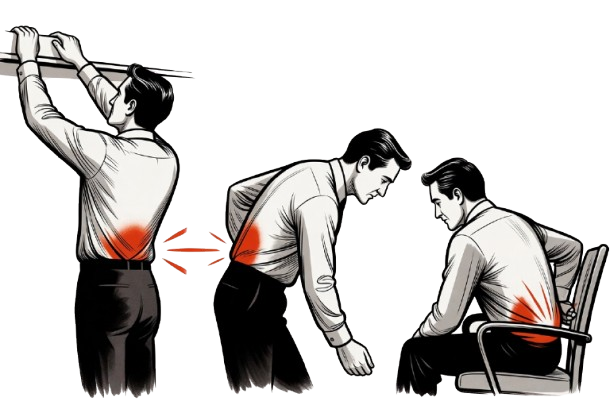
When most people think about back pain, they think about muscles, discs, and nerves. These are real contributors to pain — but there's another tissue that plays an equally significant role and receives far less attention: fascia.
Fascia is the continuous web of connective tissue that surrounds, separates, and supports every muscle, organ, bone, and nerve in the body. It is everywhere — wrapping individual muscle fibers, encasing entire muscle groups, forming the sheaths around organs, and connecting structures that anatomists once considered entirely separate.
When fascia is healthy, it is pliable, hydrated, and allows structures to glide smoothly relative to each other. When it becomes restricted — through injury, inflammation, repetitive strain, prolonged posture, or unresolved physical tension — it stiffens, adheres, and creates pulling forces that can affect structures far from the original site of restriction.
This is why back pain sometimes persists even when imaging looks clean. The restriction isn't in the disc or the bone. It's in the fascia.
How Fascial Restrictions Develop
Fascial tissue responds to mechanical stress by laying down additional collagen fibers — a protective response that can become problematic when the stress is chronic or unresolved. Over time, these additional fibers create cross-links and adhesions that reduce the tissue's ability to glide and lengthen freely.
Repetitive movement patterns that load the same tissues repeatedly
Chronic protective guarding in response to pain
Dehydration and reduced physical activity over time
Because fascia is continuous throughout the body, a restriction in one area can create tension that manifests as pain or dysfunction somewhere else entirely. A fascial restriction in the hip flexors can contribute to lumbar pain. Restrictions in the thoracic fascia can affect neck mobility. This interconnectedness is what makes fascial assessment — and fascial treatment — so different from conventional muscle-focused approaches.
What Myofascial Release Actually Does
Myofascial release is a manual therapy technique that applies gentle, sustained pressure directly to fascial restrictions. Unlike conventional massage — which targets muscle tissue through compression and kneading — myofascial release engages the fascial layer specifically, holding sustained contact and waiting for the tissue to respond and release.
The mechanism is primarily mechanical and neurological. Sustained gentle pressure changes the viscosity of the ground substance — the fluid matrix within fascial tissue — allowing it to become more pliable. It also engages mechanoreceptors in the fascia that signal the nervous system to reduce local protective tension. The result is a softening and lengthening of the restricted tissue that cannot be achieved through stretching or conventional massage alone.
The approach is slow and deliberate. A practitioner will hold a contact point for anywhere from 90 seconds to several minutes, following the tissue as it releases rather than forcing it through range of motion. It requires both detailed anatomical knowledge and a high degree of tactile sensitivity — the ability to feel subtle tissue responses and adapt accordingly.
Still living around your pain?
Let's change that. Call us and describe what you're dealing with — we'll tell you honestly if we can help.
The evidence base for myofascial release in back pain has grown substantially over the past two decades. Multiple clinical studies and systematic reviews have found that myofascial release techniques produce meaningful reductions in pain intensity, improvements in lumbar range of motion, and better functional outcomes in people with chronic low back pain compared to control conditions.
A 2015 systematic review in the Journal of Bodywork and Movement Therapies found that myofascial release was effective for reducing pain and improving physical function in both acute and chronic low back pain. More recent meta-analyses have supported these findings, with particularly strong evidence for fascial release targeting the thoracolumbar fascia — the large connective tissue structure that spans the lower back and plays a central role in spinal mechanics.
For neck pain, evidence similarly supports myofascial release as an effective component of multimodal treatment — particularly when combined with therapeutic exercise and manual joint work.
How We Use Fascial Release at Fix Back & Neck Pain
At Fix Back & Neck Pain, fascial release is always assessment-led. Before any hands-on work begins, we evaluate your movement patterns, postural alignment, and specific pain presentation to identify where fascial restrictions are contributing to your symptoms. This matters because the site of pain is often not the primary site of restriction — and treating the symptom location without addressing the source of tension produces limited results.
Our fascial work targets the specific structures most commonly involved in back and neck pain: the thoracolumbar fascia, the iliopsoas fascia and its surrounding connective tissue, the suboccipital region at the base of the skull, and the fascial sheaths surrounding the piriformis and deep hip rotators.
Fascial release is integrated with MedX spinal strengthening, spinal traction, and other modalities as part of a coordinated treatment plan. Soft tissue work prepares the tissue for strengthening — reducing the restrictions that would otherwise limit movement quality — while strengthening establishes the structural support that prevents restrictions from returning.
What to Expect During a Fascial Release Session
If you haven't experienced myofascial release before, it can feel quite different from what you might expect. The pressure is generally lighter than conventional massage. The pace is slower. Contacts are held for extended periods while the practitioner monitors subtle tissue changes.
You may notice warmth, tingling, or a mild pulling sensation as restrictions release. Some clients experience a spreading sensation as the release travels through connected fascial lines. Occasionally, clients notice emotional responses — a sudden urge to breathe deeply, a feeling of release or lightness. This is a recognized response to fascial work and reflects the deep connection between fascial tension and nervous system state.
Sessions are always client-directed and paced to your comfort. We never apply pressure that causes pain, and you are always in control of the depth and pace of the work.
You've tried other things.
This is different. Our approach addresses the structural deficit most treatments miss entirely.
If you have back or neck pain that hasn't fully resolved with conventional treatment, if your imaging doesn't fully explain your symptoms, or if you notice stiffness and restriction that seems to travel or shift rather than staying in one place — fascial involvement is worth investigating.
A thorough assessment will identify whether fascial restrictions are contributing to your pain pattern and whether myofascial release is an appropriate part of your care. Call us and tell us what you're dealing with — we'll be honest about whether we think we can help.
Trent Shuford, LMT, Cert. MedX Tech.
Not sure if this is right for you?
We put together a straightforward guide to help you decide before you call.