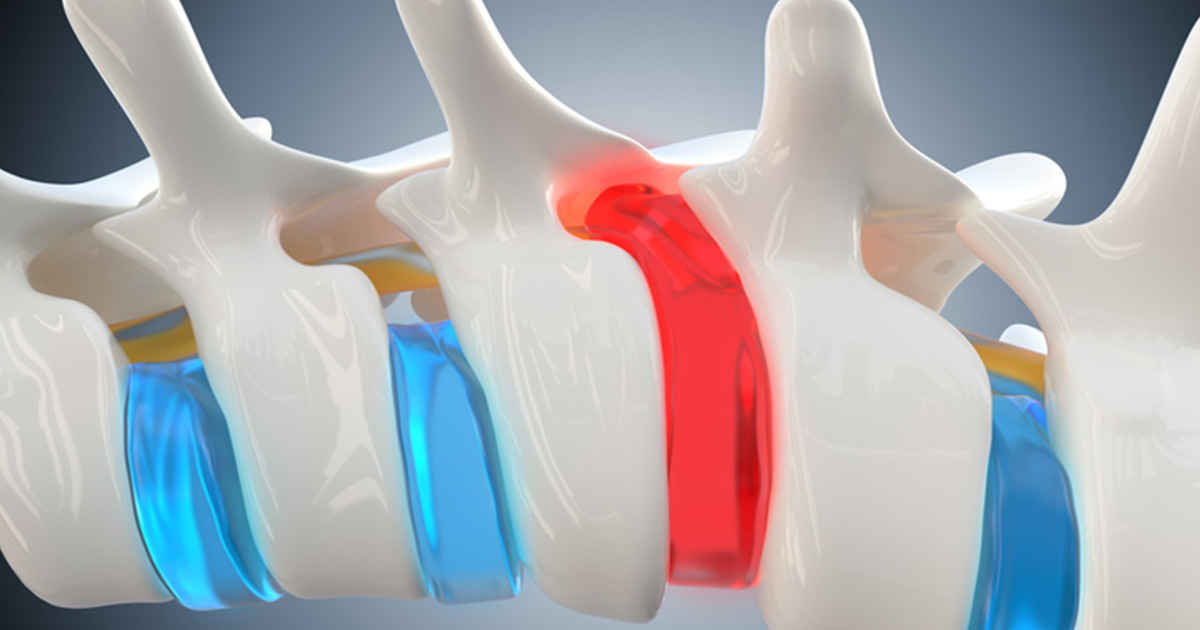
Degenerative disc disease is one of the most poorly named conditions in musculoskeletal medicine. It is not a disease in the traditional sense — it doesn't spread, it isn't caused by a pathogen, and it doesn't follow a predictable progressive course toward disability. It is a description of structural changes in the intervertebral discs that occur as part of the aging process — changes that are present in the majority of people over 40 and in a significant proportion of people in their 30s.
The alarming word is "degenerative." To most clients, degeneration implies deterioration that will continue unchecked until the spine fails. This is not what the evidence shows. The natural history of degenerative disc disease is highly variable — many people with significant disc changes on imaging have no pain at all, and many people with pain improve substantially over time with appropriate intervention.
Understanding what is actually happening — and what it means for your specific situation — is the foundation of effective treatment.
What Is Actually Happening to the Disc
The intervertebral disc has two main components: the outer annulus fibrosus — a tough ring of collagen fibers — and the inner nucleus pulposus — a gel-like core that provides the disc's shock-absorbing capacity. The disc is largely avascular — it receives nutrition through diffusion from the surrounding endplates rather than direct blood supply. This limited nutrition makes it one of the slowest-healing structures in the body.
With age and accumulated mechanical loading, the nucleus loses water content and becomes less gel-like. The annulus develops micro-tears that accumulate over time. The disc loses height as it dehydrates. These changes reduce the disc's capacity to distribute load evenly and can alter the mechanics of the entire spinal segment — changing how the facet joints load and how the surrounding musculature must work to maintain stability.
None of this is inevitable catastrophe. It is structural change that can be managed, compensated for, and in many cases significantly improved with the right interventions.
Why Pain Doesn't Always Match the Imaging
One of the most important things to understand about degenerative disc disease is the disconnect between imaging findings and pain. Studies consistently show that people with extensive degenerative changes on MRI frequently have no significant pain, while people with moderate changes sometimes have severe pain.
This disconnect exists because disc degeneration alone is not always painful. Pain typically arises when degenerative changes create secondary problems — nerve root compression, facet joint overloading, disc herniation, or instability that places excessive demand on the surrounding musculature. Treating the pain requires identifying and addressing these secondary mechanisms, not simply treating the imaging findings.
Still living around your pain?
Let's change that. Call us and describe what you're dealing with — we'll tell you honestly if we can help.
The evidence on degenerative disc disease strongly supports active intervention over passive management. The most effective approaches address the structural mechanics of the affected segment rather than simply managing symptoms.
MedX lumbar strengthening is the most important intervention for most clients with degenerative disc disease. Strong deep lumbar extensors reduce the compressive load on degenerating discs, provide stability that the disc itself can no longer provide, and address the muscular insufficiency that allows symptoms to persist. Multiple studies have demonstrated significant pain reduction and functional improvement with isolated lumbar strengthening in DDD populations.
Spinal traction decompresses the affected segments, reducing the compressive forces that accelerate disc dehydration and create nerve root irritation. For clients with disc height loss and associated nerve symptoms, traction provides meaningful relief while the strengthening protocol builds long-term structural support.
Manual therapy and fascial release addresses the compensatory patterns — tight hip flexors, restricted thoracic mobility, fascial adhesions — that develop as the spine adapts to disc changes. These compensatory patterns often contribute as much to pain as the disc changes themselves.
What to Realistically Expect
Degenerative disc disease cannot be reversed — the structural changes in the disc are permanent. What can be significantly improved is the pain and functional limitation those changes produce. Most clients with DDD who complete a structured strengthening and manual therapy protocol experience meaningful reductions in pain and substantial improvements in function.
The goal is not a perfect spine on imaging. The goal is a strong, well-supported spine that allows you to do what you want to do without pain limiting your life. That goal is achievable for the majority of people with degenerative disc disease — regardless of what their MRI shows.
Trent Shuford, LMT, Cert. MedX Tech.
Not sure if this is right for you?
We put together a straightforward guide to help you decide before you call.