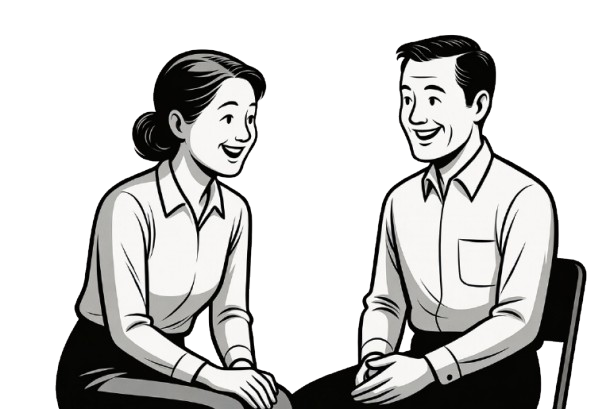

A client in his mid-forties comes in describing what he calls his "tension headache pattern." Knowledge work, twelve-hour days at a screen, two adolescent kids. He has been getting massage every two weeks for the last six years. The massage helps — he leaves feeling looser, the headaches recede for three or four days, then they come back, and he is on the table again every other Wednesday.
He is not doing anything wrong. The massage is good massage. The pattern just keeps repeating.
What nobody has told him is that his headaches are not really a tension problem. They are a neck pain problem he has not yet identified as one. And the bodywork that helps in the short term is not the thing that will resolve the pattern in the long term.
How Tension Headaches Become a Neck Pain Problem
The label is a clinical convention more than a description of mechanism. Most clients who get diagnosed with tension-type headaches do have neck and shoulder muscle tightness in the affected area, and addressing that tightness with massage, stretching, or heat does relieve the symptom. But the label glosses over the question of why the tightness is there in the first place.
The deep extensors of the cervical spine are a small group of muscles asked to do an enormous amount of work. They hold the head upright against gravity, manage micro-adjustments hundreds of times per hour, and absorb the sustained loading of screen work and seated posture. When they are strong enough to do that work, they handle it quietly. When they are not, the surrounding muscles (the upper trapezius, the levator scapulae, the suboccipitals) recruit to share the load. Those muscles are not designed for sustained postural work. They tighten. They stay tight. They refer pain into the back of the head and behind the eyes.
That referred pain is what most clients call a tension headache.
Massage releases the recruited muscles. The headache resolves for a few days. Then the same loading pattern repeats, the same compensatory recruitment happens, the same tightness returns. The bodywork is doing exactly what it does well. It is just doing it on a structure that has not been changed.
What the Research Shows About Cervical Strengthening
The cervical extensor system can be strengthened. This is not a controversial claim, and the protocol that does it has been studied directly.
Leggett and colleagues at the University of Florida Center for Exercise Science demonstrated that subjects who trained cervical extensors once weekly for eight weeks using isolated, supported loading showed significant strength improvements at 8 of 9 angles tested. Reliability of the measurement between testing days was high.
Highland and colleagues studied 90 patients with cervical pain who completed eight weeks of clinical rehabilitation using the same equipment class. Strength gains and range-of-motion gains were both significant.
Evans and colleagues followed 191 patients with chronic neck pain randomized to one of three treatments: spinal manipulation alone, spinal manipulation combined with low-tech rehabilitative exercise, or MedX rehabilitative exercise as a standalone treatment. At the two-year follow-up, both groups that received supervised rehabilitative exercise (the low-tech combination and the MedX standalone arm) held an advantage over spinal manipulation alone.
The evidence base for cervical extensor strengthening as a treatment for chronic neck pain is robust. What is less commonly discussed in the published literature is its relevance to the recurring tension headache pattern. In thirty-five years of clinical practice, the pattern I see is consistent: clients who present primarily with recurring tension headaches and a cycle of bodywork relief almost always show measurable cervical extensor weakness on objective testing. Once the strength comes back, the headache pattern shifts.
What Works — Strengthening the Source
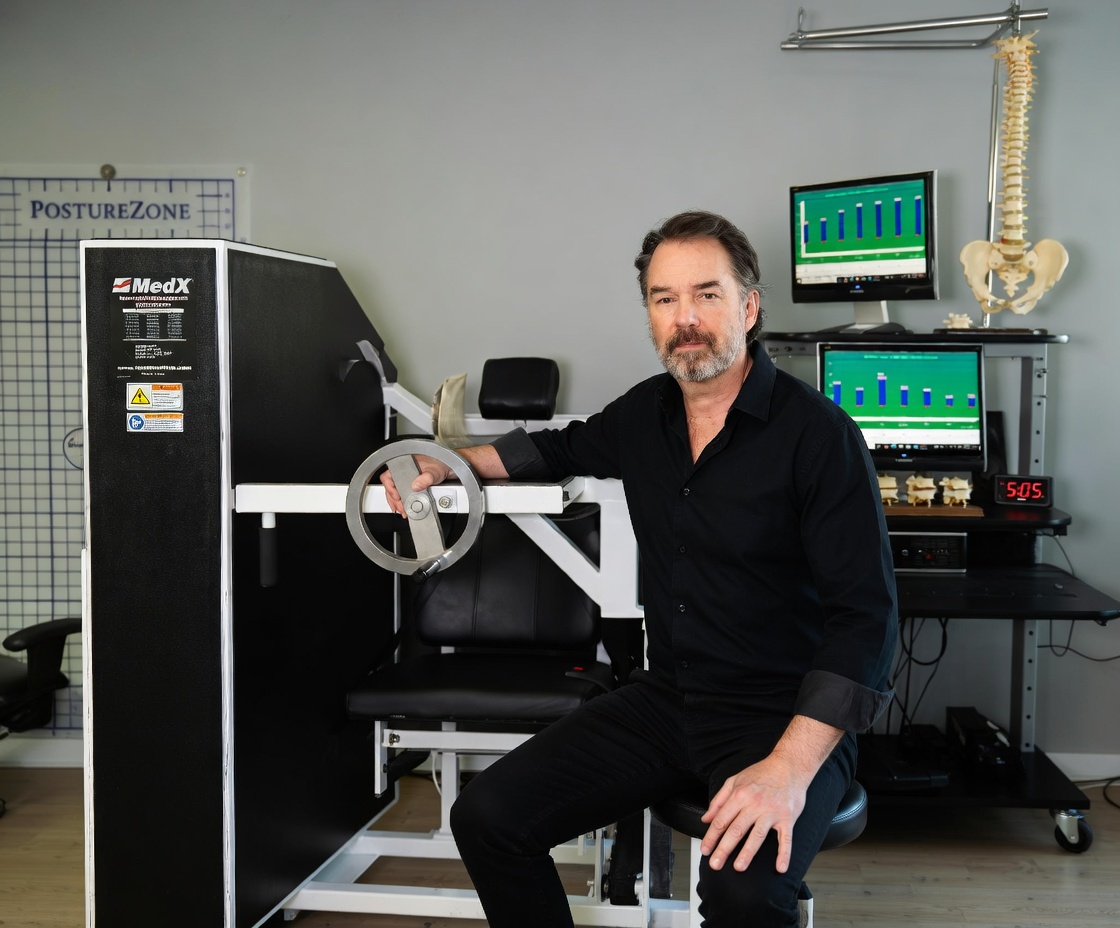
The MedX Cervical Extension Machine is built specifically to load the deep cervical extensors with the rest of the body stabilized. The head rests in a contoured restraint. The torso is locked. Cam-controlled resistance applies force through the full range of cervical motion, and the client pushes back against it at controlled angles. The equipment was designed by Arthur Jones (the engineer who invented Nautilus) and validated through the research program at the University of Florida Center for Exercise Science. There are very few of these machines still in active clinical use anywhere in the United States. Ours is the only one in the Pacific Northwest.
The protocol is short. One session per week, about fifteen minutes of work. Well-tolerated by clients in their fifties, sixties, and seventies who have not loaded the cervical spine in any directed way in years.
Strength comes back on a predictable timeline. Most clients see measurable change in eight to twelve weeks. The change is not subjective. We test at baseline. We test again at intervals. The torque values move.
What happens to the headaches during that window is the part clients remember. The two-week massage cycle stretches to three weeks. Then four. Then the client mentions that he has not thought about a massage appointment in a month, which is the first time in years he has gone that long without one. Massage continues to be useful in our practice. Manual and muscular therapy is part of integrated care for many of our clients. It just stops being the only thing holding the pattern at bay.
Neck pain that keeps coming back has a reason.
Let's find it. A thorough assessment tells us exactly what's driving your symptoms.
Call 425-758-4619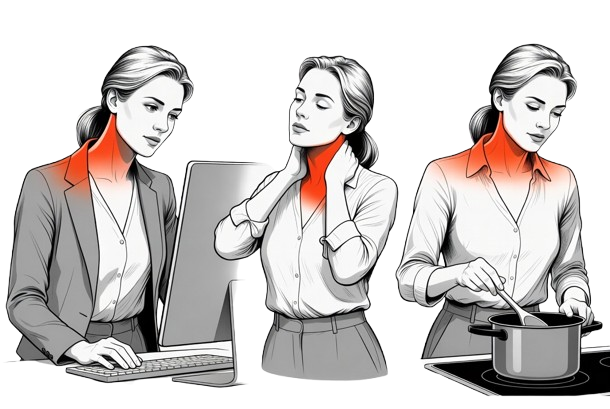
When This Is Not the Right Fit
There are clients whose tension headaches are not primarily a cervical strength problem, and for them this approach will not change much. Migraine with a neurological pattern. Headaches driven primarily by sleep disorder, dental occlusion, or temporomandibular joint dysfunction. Headaches that follow a clear trauma history and an unresolved structural problem upstream. Headaches accompanied by visual disturbance, sudden change in pattern, or neurological signs. Those need medical evaluation before any structural rehabilitation.
We screen for these patterns at the first conversation. If the headache pattern does not fit the recurring-tension-after-bodywork picture, we say so, and we point the client toward who can help.
For the much larger group whose tension headaches do fit the pattern (the knowledge workers, the screen-bound, the parents holding small children for hours a day, the clients who have been on the every-other-Wednesday massage schedule for years), isolated cervical extension strengthening is a structural intervention that does not exist anywhere else in their care.
The Conversation Worth Having
For someone whose tension headaches have become a regular feature of life, the question worth asking is not which massage therapist to see next. It is whether the cervical extensors have ever been measured, and whether they have ever been trained.
The headache is not the problem. The headache is the symptom. The strength deficit underneath is the conversation worth having.
Trent Shuford, LMT, Cert. MedX Tech.