
You've had the massage. You've been adjusted. You've done the stretches, probably more than once. The neck loosens up for a few days, sometimes a week, and then the stiffness and aching return, exactly where they always have been.
This is the pattern that most chronic neck pain clients know well. And it raises a question most treatment plans never actually ask: what if the part of your neck that's driving this has never been measured or trained?
Not estimated. Not assumed. Measured.
How Common Neck Pain Actually Is — And Why It Keeps Recurring
Neck pain is not a niche problem. Cohen's 2015 authoritative review in the Mayo Clinic Proceedings puts neck pain as the fourth leading cause of disability globally, with an annual prevalence exceeding 30%. Roughly half of the people who develop neck pain continue to have ongoing pain or recurrence over time (Cohen 2015, PMID 25659245).
That recurrence figure is the part worth sitting with. If neck pain were primarily an acute mechanical event — something that disrupted tissue, healed, and resolved — we would expect most people to recover fully and stay recovered. Many do. But a substantial portion do not. They cycle through episodes of pain and relief, each round of treatment buying time rather than resolving the underlying problem.
The question is what makes one person a resolver and another a recycler. The answer is not always obvious, and it is not the same for everyone. But there is one variable that clinicians rarely assess and that the research shows is consistently relevant: the strength of the cervical extensor muscles.
The Cervical Extensors — What They Are and Why They Matter
The cervical extensors are the deep muscles at the back of the neck responsible for holding the head upright and controlling its movement. The head weighs roughly ten to twelve pounds. The cervical extensors are working against that load every waking hour, managing posture, resisting forward pull, and absorbing the mechanical demands of daily activity.
When these muscles are weak, the neck does not have adequate support. The joints, discs, and surrounding soft tissue absorb load that the musculature should be handling. Movement becomes restricted. The neck fatigues more quickly. Stiffness develops not because something is mechanically "stuck" but because the muscular system does not have the capacity to sustain the demands placed on it.
What Leggett and colleagues documented in 1991 is instructive here. Testing 73 subjects at eight angles through a 126-degree range of cervical flexion, they found that isometric cervical extension strength could be measured with high between-day reliability (r = 0.90 to 0.96 across angles), and that a training cohort improved strength at six of eight tested angles after ten weeks of once-weekly training, while controls did not change (Leggett 1991, PMID 1781507).
The reliability finding matters as much as the training result. It means cervical extensor strength is not an abstract quality — it is a measurable, repeatable variable. And if it is measurable, the absence of measurement is a clinical choice, not a necessity.
Most chronic neck pain clients have never had that measurement taken.
What the Research Actually Shows About Cervical Strengthening
The research on cervical strengthening is not overwhelming in volume, but what exists is consistent in direction.
Highland and colleagues published a 1992 clinical study of 90 patients with cervical pain — diagnoses that included degenerative disc disease, herniated disc, and cervical strain. After eight weeks of targeted cervical rehabilitation, participants showed significant gains in isometric cervical extension strength and range of motion, alongside significantly reduced perceived pain (Highland 1992, PMID 1631723). This was not a population of healthy volunteers training for performance. These were patients in pain.
Evans and colleagues published a randomized clinical trial in 2002 comparing spinal manipulation alone, spinal manipulation plus low-tech rehabilitative exercise, and MedX rehabilitative exercise in 191 patients with chronic neck pain. Over two years of follow-up, patient-rated pain favored the two exercise groups over manipulation alone. The MedX rehabilitative exercise group was one of the two that favored (Evans 2002, PMID 12438988).
The largest overview to date is a 2023 umbrella review by Rasmussen-Barr and colleagues, synthesizing 25 systematic reviews involving 17,321 participants. Across exercise types — including resistance training — short-term positive effects on pain were found versus non-exercise controls (Rasmussen-Barr 2023, PMID 37828488). Cohen's 2015 review reaches the same plain conclusion: exercise treatment appears to be beneficial in patients with neck pain (Cohen 2015, PMID 25659245).
This is not a claim that cervical strengthening is the only effective approach, or that it outperforms every alternative. The evidence does not support that framing. What it supports is more specific: strengthening the cervical extensors produces meaningful short-term reductions in chronic neck pain, and it builds measurable strength and range of motion in a muscle group that is otherwise rarely trained.
What distinguishes MedX spinal strengthening in this context is not a claim of superiority. It is the objective measurement of the target muscles before and after training. That measurement is what makes it possible to know whether the actual source of the problem was addressed — not assumed, addressed.
Neck pain that keeps coming back has a reason.
Let's find it. A thorough assessment tells us exactly what's driving your symptoms.
Call 425-758-4619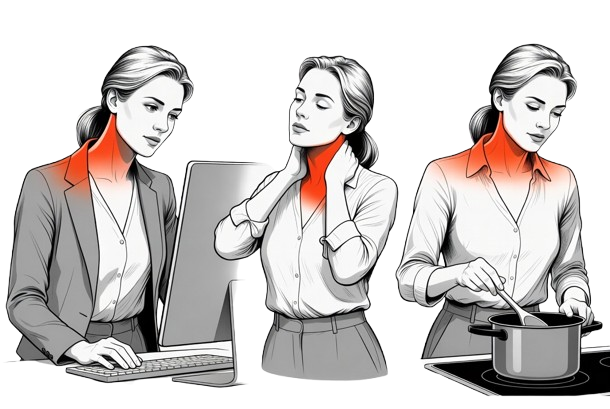
What Objective Measurement Changes
Here is the practical gap in most neck pain treatment: nobody has tested the cervical extensors directly.
Clinicians assess range of motion. They palpate for tenderness. They may use imaging. What they do not typically do is quantify isometric cervical extension strength at standardized angles through a documented range of motion — the kind of data that would tell you whether this specific muscle group in this specific person is contributing to their pain pattern.
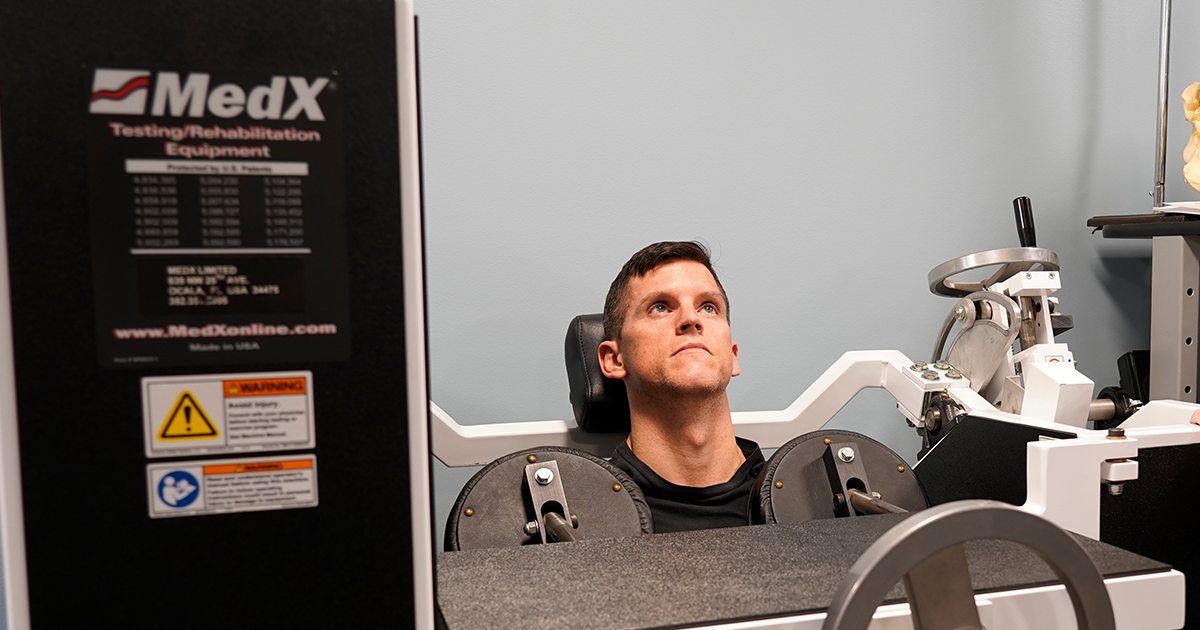
The MedX Cervical Extension Machine is designed to do exactly that. Using the testing protocol documented by Leggett and colleagues, it measures isometric strength at multiple standardized angles, producing an objective cervical extensor strength profile. That profile can be compared against normative values and tracked across the course of treatment.
The clinical significance of this is not abstract. When a client comes in having tried massage, chiropractic, and physical therapy without resolution, one of the most important questions we can ask is: has anyone actually measured the muscles involved? If the cervical extensors are significantly weak, that weakness will not be corrected by soft tissue work, manipulation, or passive modalities — however skilled the clinician providing them. The structural deficit will remain.
Measurement establishes whether that deficit exists. If it does, training that targets the cervical extensors directly can address it in a way nothing else in the treatment inventory will.
The mechanism of why MedX spinal strengthening works when everything else has failed is also worth reading for anyone new to this approach.
Symptoms That Warrant a Clinician First
Not every neck pain presentation is appropriate for a strengthening program. There are symptoms that require medical evaluation before any rehabilitation protocol begins, and some presentations that should be routed to a physician regardless of how chronic or familiar the pain feels.
Be evaluated by a physician or appropriate specialist first if you are experiencing any of the following:
Radiating pain, numbness, or tingling into the arm or hand. These symptoms suggest possible cervical radiculopathy — nerve involvement from a compressed or irritated root. This requires clinical evaluation, often including imaging, to determine the cause and appropriate management.
Arm weakness. Any new or progressive weakness in the arm or hand warrants prompt evaluation. This is not a soft-tissue problem to work around.
Dizziness. Dizziness has a wide differential, and "cervicogenic dizziness" is specifically a diagnosis of exclusion — meaning it can only be attributed to cervical causes after other causes have been ruled out. Do not assume dizziness is a neck muscle problem without a proper workup.
Gait or balance disturbance. Difficulty walking steadily, unexpected stumbling, or a new change in how your legs feel while walking can indicate cervical myelopathy — spinal cord involvement. This is a serious finding.
Clumsiness in the hands. Dropping things more than usual, difficulty with fine motor tasks, or a feeling that the hands are not responding normally are potential myelopathy signs.
Bilateral symptoms. Symptoms on both sides simultaneously — particularly neurological symptoms — expand the differential significantly and warrant evaluation.
Bowel or bladder changes. Changes in bowel or bladder function in the context of neck symptoms are red flags for cord involvement and require urgent evaluation.
Unexplained or severe pain with systemic symptoms. Significant weight loss, fever, or pain that is constant and non-mechanical in character can indicate pathology that is not musculoskeletal. Cohen 2015 specifically names myelopathy, atlantoaxial subluxation, and metastases as serious pathologies that neck pain history and examination must be attentive to (Cohen 2015, PMID 25659245).
If any of these are present, the first step is a clinician visit, not a strengthening program. We are glad to be a resource in that conversation if the structural picture becomes clearer after workup. But we will also tell you directly when a presentation needs a different first step.
How We Approach Cervical Rehabilitation at Fix Back & Neck Pain
For clients who have been cleared of neurological involvement and whose neck pain is mechanical and chronic, the assessment comes first. Always.
We do not build a treatment program based on assumptions about what muscles need work. We measure. The MedX Cervical Extension Machine produces an objective isometric strength profile at standardized angles. That profile tells us where the deficits are, how they compare to normative values, and what a training program should actually be targeting. Progress is tracked against the baseline — not estimated, tracked.
Cervical rehabilitation at this practice is part of MedX spinal strengthening, one of our six clinical services. It is not a standalone treatment and is not offered in isolation from a full clinical picture. For many clients, manual and muscular therapy plays a role alongside the strengthening work — soft tissue preparation can improve the quality of training, and the two modalities address different aspects of the same problem. The assessment determines what the program includes.
We work one-on-one. There are no handoffs, no abbreviated sessions, no volume-based shortcuts. The clinical relationship is direct. You are not buying access to a clinic. You are joining a practice.
We also turn away clients who are not the right fit. If the clinical picture suggests something outside our scope, we say so. The clarity matters more than the intake.
Your neck shouldn't be something you manage.
It should be something you solve. Call us and let's talk about what's possible.
Call 425-758-4619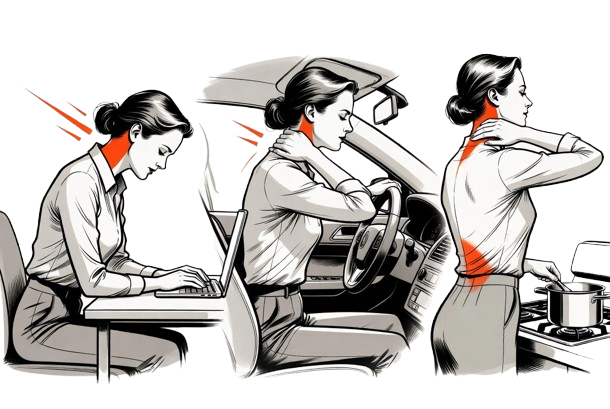
If Your Neck Pain Keeps Coming Back
Massage and adjustments have real value. There are clients for whom that approach is exactly what the situation calls for. But if you have been through multiple rounds of soft tissue work and manipulation and your neck pain returns reliably to where it started, there is a reasonable question that probably has not been answered yet: have the cervical extensors ever been tested?
Not assessed generally. Not inferred from how the neck moves or feels to palpation.
Tested. Objectively. At measured angles, against documented normative data.
If the answer is no, that is the variable worth investigating. The strength of the muscles holding your neck up is not a minor detail in the story of chronic neck pain. For a meaningful portion of clients who keep returning to the treatment table, it is the variable that has been missing from the conversation the entire time.
If that description fits, the next step is a first conversation.
Trent Shuford, LMT, Cert. MedX Tech.