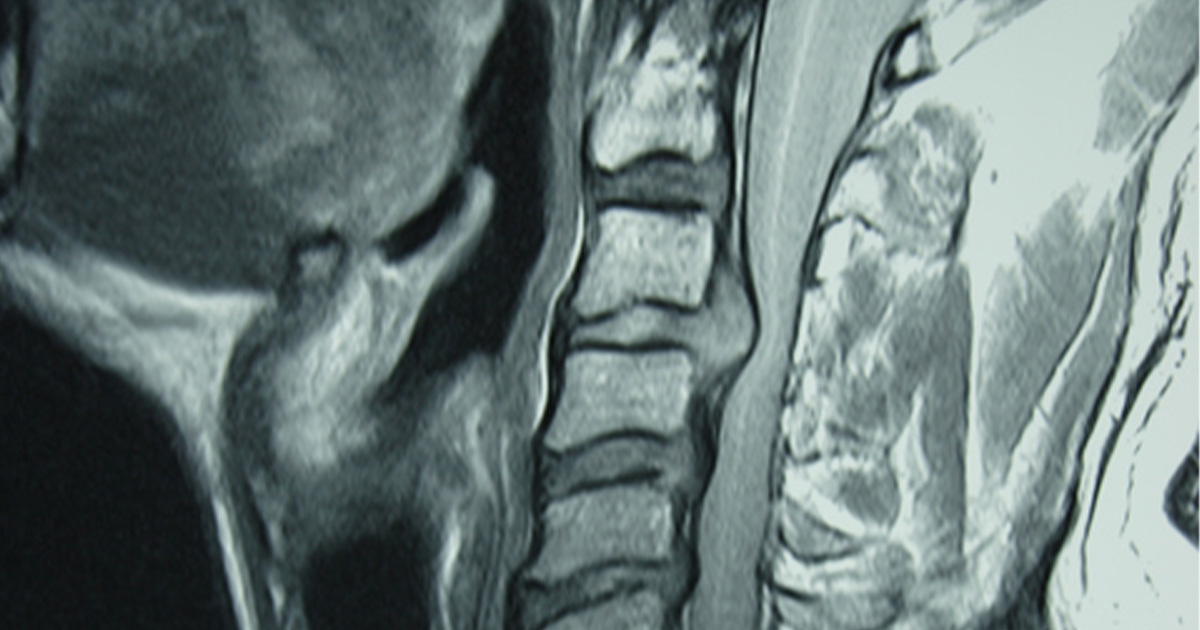
For most people, receiving an MRI report that mentions disc herniation is a frightening moment. The language of radiology reports — bulging, herniated, extruded, impinging, compressing — sounds alarming. Clients often leave the imaging center convinced that their spine is severely damaged and that surgery is inevitable.
Most of the time, neither of these things is true. Understanding what an MRI actually shows — and what the research says about the natural history and treatment outcomes for disc herniations — replaces fear with information. And information is the basis of good decisions.
What a Herniated Disc Actually Is
The intervertebral disc consists of a tough outer ring — the annulus fibrosus — and a softer inner core — the nucleus pulposus. A disc herniation occurs when the inner material pushes through a weakness or tear in the outer ring and extends beyond the normal disc boundary.
Herniations are classified by their extent and direction. A bulge involves the outer ring extending beyond its normal boundary without rupture. A protrusion involves the inner material pushing through but remaining contained. An extrusion involves the inner material extending through the outer ring. A sequestration involves a fragment of disc material separating and migrating into the spinal canal.
Each of these has different implications for treatment and prognosis — but none of them automatically means surgery is required.
The Most Important Research Finding You Haven't Heard
Here is the finding that changes the entire conversation about disc herniations: a substantial body of research using serial MRI imaging — scanning patients at intervals without surgical intervention — shows that herniated disc material resorbs spontaneously in a significant proportion of cases.
Studies have found spontaneous resorption rates ranging from 60% to over 80% for extruded disc herniations followed over 12 to 24 months. The larger the herniation, the higher the resorption rate — which is counterintuitive but well-documented. Sequestered fragments show particularly high spontaneous resorption rates.
This does not mean all herniations resolve on their own. It means that the body has a genuine capacity to address herniated disc material — and that this capacity is often underestimated in conversations about surgical versus non-surgical management.
Still living around your pain?
Let's change that. Call us and describe what you're dealing with — we'll tell you honestly if we can help.
What Predicts Whether a Herniation Will Cause Significant Pain
The size and location of a herniation on MRI is only partly predictive of the symptoms it produces. Multiple large population studies have demonstrated that a substantial proportion of people with significant disc herniations on MRI have no pain at all — they were imaged for unrelated reasons and the herniation was an incidental finding.
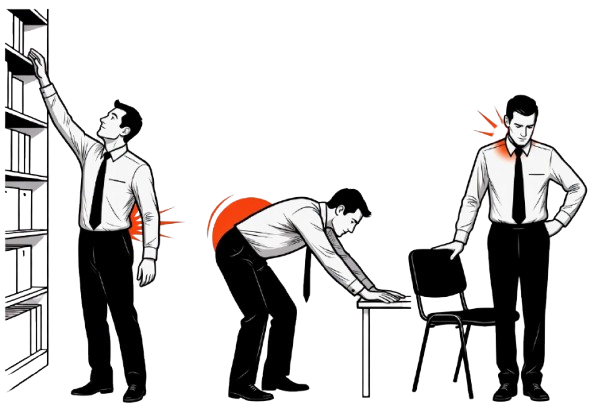
What determines whether a herniation is painful is more complex than imaging alone can capture. The degree of nerve root compression matters — but so does the inflammatory response around the compressed nerve, the strength of the surrounding musculature that affects how much load reaches the disc, the client's pain sensitization history, and the mechanical context in which the nerve root exists.
This is why imaging findings must always be interpreted in the context of the client's clinical presentation — not in isolation.
The Non-Surgical Approach That Changes Outcomes
For clients without progressive neurological deficits — which is the majority of herniated disc clients — the evidence strongly supports a structured non-surgical approach as the first-line intervention. Surgery produces equivalent long-term outcomes to conservative care for most disc herniations, with the difference being the speed of initial improvement.
What conservative care looks like matters enormously. Rest alone does not constitute adequate conservative treatment. The evidence supports active, structured rehabilitation that includes spinal decompression, deep stabilizer strengthening, and manual therapy.
Our approach for herniated disc clients combines spinal traction to reduce compressive loading and support natural resorption, MedX lumbar strengthening to rebuild the muscular support that reduces disc loading long-term, and manual therapy to address the soft tissue components of the pain pattern. Most clients on this protocol experience meaningful improvement within six to ten sessions — without surgery.
When Surgery Is Appropriate
This is not an anti-surgery message. For clients with progressive neurological deficits — worsening weakness, cauda equina syndrome, or intractable pain despite comprehensive conservative care — surgery is clearly appropriate and we support clients in pursuing it. Our pre-surgical conditioning protocol helps these clients enter surgery in the best possible physical condition.
What we advocate for is informed decision-making — understanding that the majority of herniated disc clients have real, evidence-supported non-surgical options before surgery becomes necessary. If you have been told you need surgery for a disc herniation and have not yet completed a structured non-surgical protocol, call us. We will be honest about whether your presentation is one where conservative care is likely to be sufficient.
Trent Shuford, LMT, Cert. MedX Tech.
Not sure if this is right for you?
We put together a straightforward guide to help you decide before you call.