
The Machine Looks Right and Still Fails
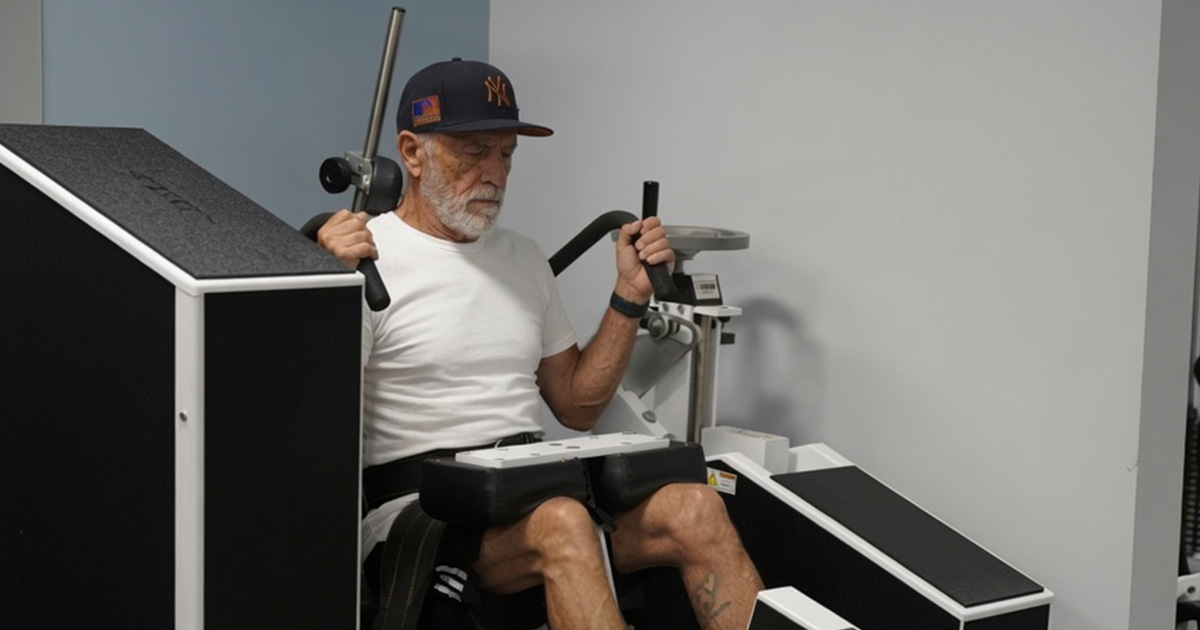
A man came into the clinic last year after eight months on a gym machine his physical therapist recommended. Seated lumbar extension, decent form, progressive weight. His back still hurt. When I looked at what the machine actually let his body do, the problem was obvious within a minute. His pelvis was free to rotate with his torso. Every rep, his hip flexors and glutes were doing the work his lumbar extensors were supposed to be doing, and the muscles that actually needed to get strong barely fired.
This is the piece almost nobody explains to clients, and pelvic stabilization is the difference between strengthening that works and strengthening that quietly wastes months.
The Common Misconception: Any Extension Exercise Counts
Most people, and honestly most trainers, assume that if you are moving your torso against resistance in an extension pattern, you are strengthening your lumbar spine. That assumption is wrong, and it is wrong in a specific, measurable way.
The lumbar extensor muscles, especially the deep multifidus, are short-lever muscles that attach segment to segment along the spine. They are built to control small amounts of intervertebral motion, not to swing a torso through a wide arc. When your pelvis is unstabilized during a "back extension," the much larger and more powerful hip extensors, your glutes and hamstrings, take over the movement almost immediately. You get a workout. You do not get a stronger lumbar spine. The exercise looks identical from across the room. The muscle recruitment is completely different.
What Graves 1994 Actually Measured
This is not a theoretical argument. Graves 1994 tested isolated lumbar extension strength under two conditions: with the pelvis stabilized and without. The stabilized group improved isolated lumbar strength by 23.5%. The unstabilized group changed by negative 1.2%, meaning they got slightly weaker in the very muscles they were supposedly training. Same general exercise. Same intent. Opposite outcome, because one version isolated the lumbar extensors and the other let the hips hijack the movement.
San Juan 2005 backs this up from a different angle, using EMG to measure muscle activation directly. Multifidus activity was 51% greater with pelvic stabilization than without it. That is not a small technical difference. That is the difference between an exercise that reaches the target tissue and one that does not.
Why This Gets Missed So Often
Part of the reason this detail gets skipped is that pelvic stabilization is hard to build into equipment. Most gym back-extension stations, most home devices, and a lot of clinic equipment prioritize a large range of motion and a familiar hinge pattern because that is what is cheap to manufacture and easy to explain. Stabilizing the pelvis while still allowing full lumbar range through 0 to 72 degrees of extension requires a mechanically specific restraint system. It is not something you bolt onto a generic machine.
This is the design principle behind the MedX equipment we use in the clinic. The pelvic restraint locks the pelvis and femurs in place while the lumbar spine moves independently through its own range, tested and trained across seven angles: 0, 12, 24, 36, 48, 60, and 72 degrees. Conventional lumbar testing is also confounded by gravity, stored elastic energy in the tissue, and mechanical friction in most equipment, so even the measurement of lumbar strength is unreliable without this kind of isolation. MedX results are compared against normative data from the University of Florida, aiming for an ideal normalized ratio of 1.4:1 between extensor and flexor strength.
None of this means people need to train constantly to get a result. Carpenter 1991 and Graves 1990 both found that once-weekly training was as effective as two to three times per week for building lumbar extension torque, provided the movement was isolating the right muscles. Frequency was never the limiting factor. Isolation was.
Most people have never trained the muscles that actually support the spine.
You can. MedX isolates and strengthens the deep spinal extensors that conventional exercise can't reach.
Call 425-758-4619
What This Means for Pain, Not Just Strength
Strength numbers matter, but clients want to know if this changes how their back feels. Risch 1993 found that ten weeks of isolated lumbar extension training reduced both pain and dysfunction compared to a control group, using this same isolation principle. Nelson 1995 followed 627 completers out of 895 chronic low back pain patients and found 76% rated their outcome excellent or good, with 94% of those good and excellent outcomes still holding a year later. These are patient outcomes tied to a protocol built specifically around isolating the lumbar extensors with pelvic stabilization, not a generic strength-training claim.
I want to be precise about one thing. Pollock 1989 documented a 102% increase in lumbar extensor strength at zero degrees over ten weeks with once-weekly training. That is a real and striking number, but it came from healthy subjects, not a chronic pain population, and it measures strength, not pain relief. I use it to explain how responsive the lumbar extensors are to correctly isolated training. I do not use it to promise a pain outcome, because that is not what the study measured.
Where This Fits With the Rest of the Body
Pelvic stabilization is not a lumbar-only concept, it is a design constraint you find wherever we ask an isolated muscle group to do real work. It shows up in why MedX spinal strengthening works, because the broader case for that equipment rests on the same pelvic restraint principle covered here in mechanical detail. This post is specifically about the pelvic-stabilization mechanism itself, while that piece covers the full picture of why the equipment works. It also connects to the psoas, since a pelvis that is not properly stabilized during training can reinforce the same compensation patterns described in the piece on the psoas muscle as a hidden driver of chronic low back pain. Strength training and manual work are solving related but different problems, and neither substitutes for the other.
The Hard Truth
An exercise can look correct, feel challenging, and still fail to strengthen the muscle it claims to target. Pelvic stabilization is not a minor technical footnote. It is the variable that decides whether ten weeks of effort builds a stronger lumbar spine or just a more efficient compensation pattern. If you have been doing back extensions for months without change, the machine, not your effort, may be the reason. If you are dealing with symptoms beyond local pain, radiating leg symptoms, numbness, or anything suggesting a neurological component, that needs a clinician's evaluation before any strengthening protocol begins. For everyone else, the question worth asking about any lumbar exercise is simple: what is happening at the pelvis while the spine moves. If you want to talk through what that means for your specific back, call 425-758-4619 and we will start with the first conversation.