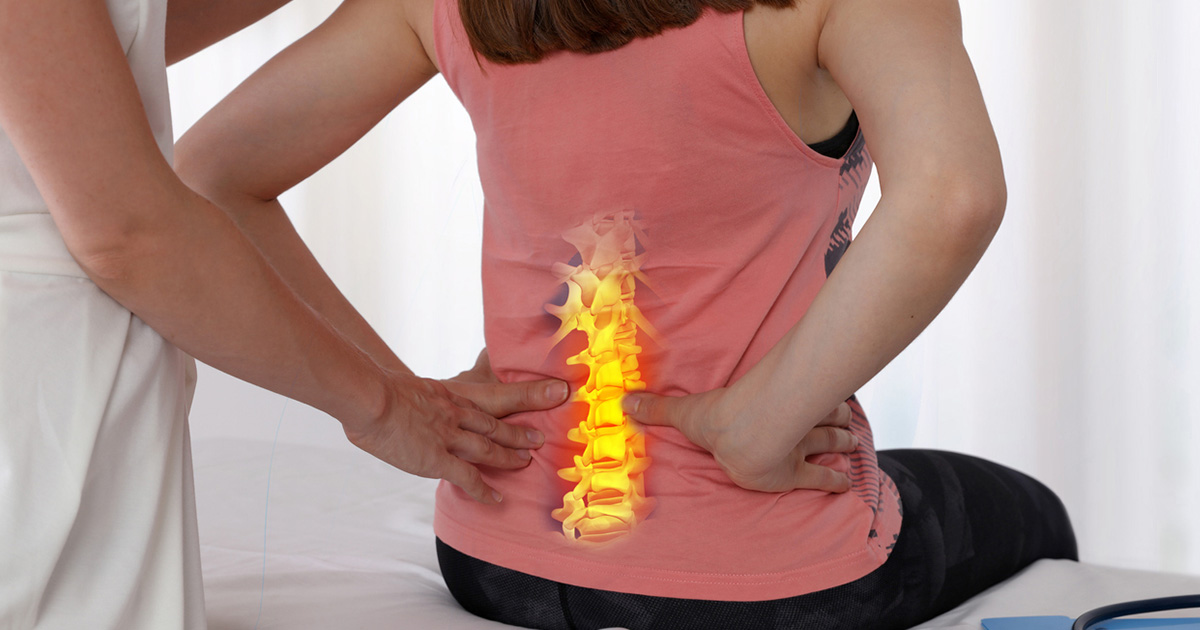
Sciatica is not a diagnosis — it's a symptom. Specifically, it's pain, numbness, tingling, or weakness that travels along the path of the sciatic nerve — from the lower back through the buttock and down the back of the leg, sometimes reaching the foot.
The sciatic nerve is the largest nerve in the body, formed by nerve roots from the lumbar and sacral spine. When any of these nerve roots are compressed or irritated — by a herniated disc, bone spur, thickened ligament, or tight piriformis muscle — the nerve signals that pain along its entire distribution. This is why sciatica can produce symptoms from the lower back all the way to the toes, even when the source of the problem is entirely in the spine.
The Most Common Causes
Understanding the cause of a client's sciatica is essential because the cause determines the treatment. The most common causes include:
Lumbar disc herniation: The most frequent cause of true sciatica. When the inner material of a disc herniates through the outer ring, it can press directly on a nerve root. The L4-L5 and L5-S1 levels are most commonly involved, producing classic sciatic pain down the back of the leg.
Lumbar stenosis: Narrowing of the spinal canal — usually from degenerative changes including bone spur formation and ligament thickening — compresses multiple nerve roots. Stenotic sciatica typically worsens with standing and walking and improves with sitting or forward flexion.
Piriformis syndrome: The piriformis muscle in the deep buttock can compress the sciatic nerve as it passes beneath or through it. This is often misdiagnosed as disc-related sciatica but has a distinct presentation and responds to different treatment.
Spondylolisthesis: Forward slippage of one vertebra over another can narrow the nerve exit points and compress the sciatic nerve roots.
Why Most Sciatica Resolves Without Surgery
This is the most important thing to understand about sciatica: the majority of cases — including cases involving significant disc herniation — improve with time and appropriate conservative care. Imaging studies following patients with disc herniations without surgery show that herniated disc material resorbs naturally in a significant proportion of cases, with corresponding improvement in nerve root compression and symptoms.
The critical qualifier is "appropriate conservative care." Rest alone does not qualify. The evidence strongly supports active, structured rehabilitation over passive rest for sciatic recovery — and the specific interventions matter enormously.
Still living around your pain?
Let's change that. Call us and describe what you're dealing with — we'll tell you honestly if we can help.
Our approach to sciatica addresses all the contributing factors simultaneously rather than treating the symptom in isolation.
Spinal traction decompresses the affected disc segment — reducing the compressive load that maintains the herniation and creating negative pressure that encourages retraction of herniated material. For disc-related sciatica this is often the most immediately effective intervention for neural symptoms.
MedX lumbar strengthening rebuilds the deep spinal extensor strength that reduces compressive loading on the disc and nerve roots over time. This is the intervention that changes the long-term trajectory — preventing recurrence rather than simply managing the current episode.
Manual therapy and fascial release addresses the piriformis and surrounding hip musculature, reducing secondary nerve compression and the muscle guarding that develops in response to sciatic pain. For piriformis syndrome specifically, this is the primary intervention.
Red Flags — When to Seek Immediate Care
Most sciatica, while painful, is not a medical emergency. However certain presentations require immediate medical attention. If you experience loss of bladder or bowel control alongside leg pain, progressive weakness in both legs, or saddle area numbness — seek emergency care immediately. These symptoms suggest cauda equina syndrome, a rare but serious condition that requires urgent surgical intervention.
Living With Sciatica While Recovering
Recovery from sciatica is rarely linear. Most clients experience fluctuation — better days and worse days — as the nerve gradually heals. Understanding that this fluctuation is normal reduces the anxiety that often accompanies the process and helps clients stay committed to the rehabilitation protocol during setbacks.
We provide detailed home care guidance — including positions of relief, safe movement strategies, and exercises appropriate to each stage of recovery — so clients can actively support their own progress between sessions.
Trent Shuford, LMT, Cert. MedX Tech.
Not sure if this is right for you?
We put together a straightforward guide to help you decide before you call.