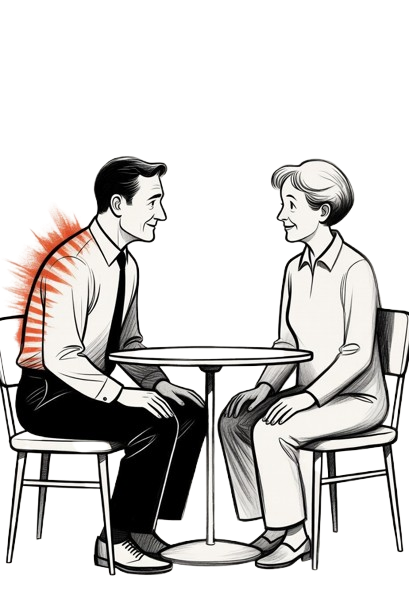

A man walked into my clinic last year after two years of daily crunches and planks. His chronic low back pain had not improved. If anything, it was worse. He was strong through his abdominals and had done everything a fitness magazine told him to do. Nobody had ever tested his lumbar extensors, the muscles that run along the spine and hold it upright against gravity all day long.
This is the piece almost everyone misses. Lumbar extension strength is rarely tested, while chronic low back pain gets treated as a flexion problem. Clients are told to work the abdominals, to stabilize the core, to brace. Meanwhile the lumbar extensors, the muscles most directly responsible for holding the spine in a neutral, load-bearing position, go untested and untrained. That is backwards, and it is why so many people who train their core diligently still hurt.
The Misconception That Core Strength Equals Back Health
Core training became shorthand for spine health somewhere along the way. It is not wrong that the trunk needs strength. It is incomplete. The abdominal wall flexes the spine. The lumbar extensors extend it and resist flexion under load. When someone spends a career sitting, bending, and lifting, their spine spends most of its time in flexion or fighting to avoid it. The muscles doing that fighting are the extensors, and in a person who has been guarding a painful back for months or years, those muscles have often gone weak from disuse, not from being ignored in a workout plan.
A weak extensor group means the passive structures of the spine, the discs, the ligaments, the facet joints, absorb load that muscle should be handling. That is a mechanical problem. No amount of ab work fixes it, because ab work does not load the extensors in a way that reverses that weakness. This is also why "Why Core Workouts Alone Will Not Fix Your Back Pain" is worth reading if this is the first time you are hearing this distinction.
Why the Extensors Atrophy Faster Than People Realize
Lumbar extensor weakness in chronic low back pain clients is not mild. It is often severe, and it happens fast. Once someone starts guarding a painful back, they stop asking those muscles to work through full range, and the muscles respond the way any muscle responds to disuse. They shrink. They lose recruitment capacity. The nervous system, protecting a painful area, inhibits the muscle further, so even attempts to use it produce less force than the muscle is capable of.
This creates a loop. Weak extensors mean more load falls on the passive spine structures. That load creates more pain. More pain creates more guarding. More guarding deepens the weakness. Nobody breaks this loop by working the front of the trunk. The loop only breaks when the extensors themselves are loaded directly, through a full range of motion, in a way the guarded nervous system cannot avoid.
Why Lumbar Extension Strength Beats Core Flexion
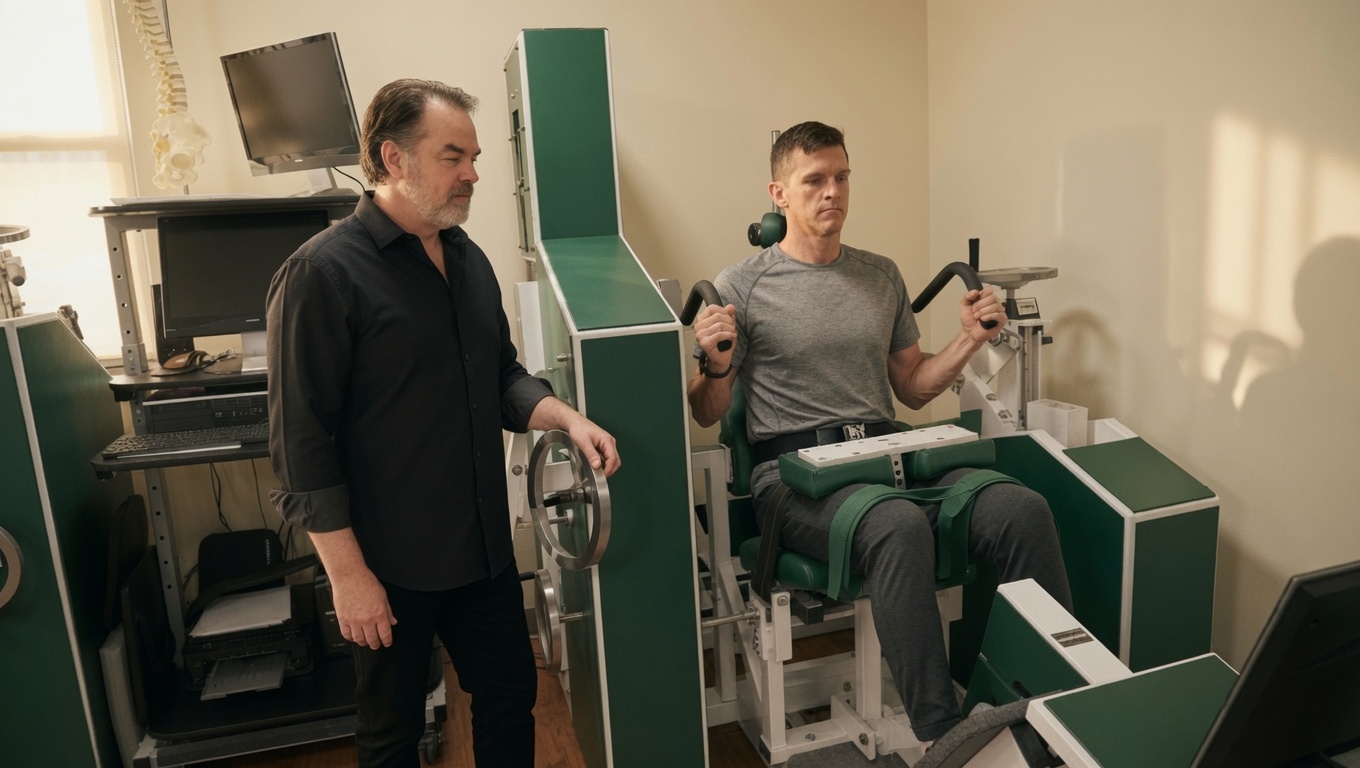
Here is the mechanical detail most training programs miss entirely. To load the lumbar extensors in isolation, the pelvis has to be stabilized. If the pelvis is free to rotate during an extension exercise, the hip extensors and hamstrings take over the movement and the lumbar extensors barely engage. This is not a minor technical point. Graves' 1994 research found that isolated lumbar strength improved only when the pelvis was stabilized during training, with an increase of 23.5%, while the unstabilized group actually lost strength, at -1.2%. San Juan's 2005 study measured this at the muscle level and found multifidus EMG activity 51% greater when the pelvis was stabilized.
This is exactly why MedX spinal strengthening/rehabilitation equipment exists. It restrains the pelvis so the lumbar extensors do the work they are being trained to do, rather than letting the hips quietly compensate. Most gym equipment and most home exercise routines cannot do this. That is not an opinion about brand preference. It is a mechanical requirement that most fitness tools were never built to meet. If you want the full picture of why this equipment matters when other approaches have not worked, "Why MedX Spinal Strengthening Works When Everything Else Has Failed" goes deeper into that mechanism.
Still living around your pain?
Let's change that. Call us and describe what you're dealing with — we'll tell you honestly if we can help.
Call 425-758-4619
What Directly Loading the Extensors Produces
Pollock's 1989 research found a 102% increase in lumbar extensor strength at 0 degrees after ten weeks of training once per week, in healthy subjects. That figure describes a strength gain in healthy people, not a pain outcome in a chronic pain population, and it should not be quoted as if it were. What it demonstrates is how quickly and dramatically the lumbar extensors respond to properly isolated loading, once the pelvis is controlled and the muscle is finally asked to do its job through full range.
Nelson's 1995 research followed 627 completers out of 895 chronic low back pain patients and found 76% excellent or good outcomes, with 94% of those good or excellent outcomes maintained at one-year follow-up. That is a patient outcome figure, not a healthy-subject strength figure, and the distinction matters when you are trying to understand what isolated extensor training can do for someone who has been in pain for years rather than someone training from a healthy baseline.
In my own clinical work with clients whose chronic low back pain had already led to a scheduled spinal surgery, 86.5% avoided that surgery. That is not a clinical trial number. It is a practice-tracked figure specific to clients who came in with surgery already on the calendar, and I want to be exact about what it does and does not represent. It represents what happened when the mechanical problem, weak, uninhibited extensors under uncontrolled load, was actually addressed.
Why Flexion-Focused Programs Keep Failing These Clients
A client with genuinely weak lumbar extensors who does more crunches is asking an already-overloaded spine to flex further while doing nothing to build the muscle that resists that flexion. It can feel productive. It is not addressing the actual deficit. The extensors are the muscles the body needs strong to keep the spine upright against gravity for the other twenty-three hours of the day when nobody is doing a workout at all.
This does not mean flexion strength is worthless. It means it has been given credit for a job it was never built to do. Chronic low back pain that persists despite months of consistent core training is often not a sign that the client needs to try harder. It is a sign that the wrong muscle group has been trained the entire time.
You don't have to live with this. Backs and necks can get stronger, pain can ease, and the body is more capable of recovery than most people are told. This blog is here to give you honest, practical information about what actually helps. As we learn more, we'll keep sharing what works. If something here spoke to you, that's a good reason to reach out and start the first conversation.
Trent Shuford, LMT, Cert. MedX Tech.