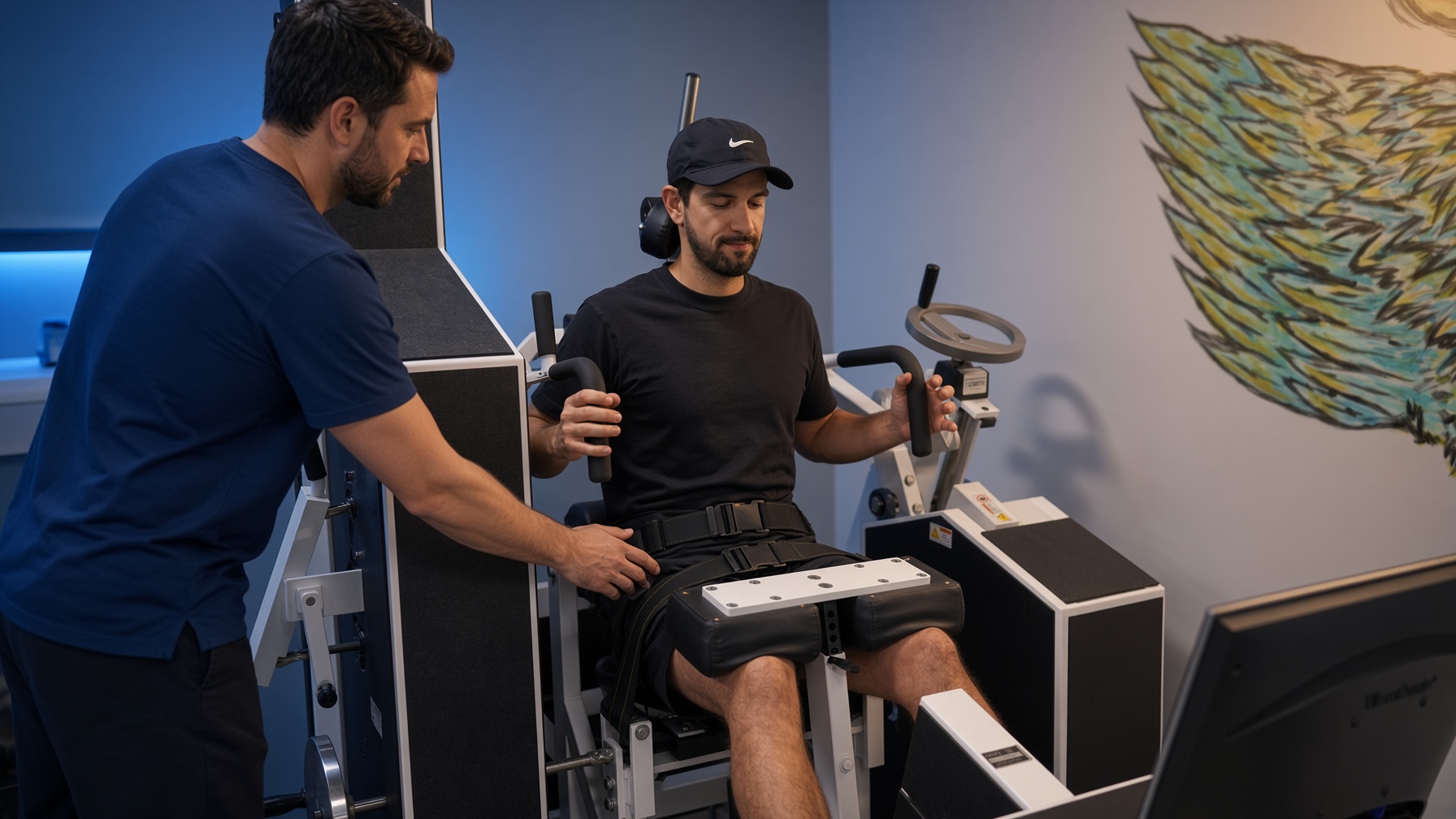

A client walks in for week nine of MedX spinal strengthening and says the same thing almost every time: "I was getting stronger, and now nothing is changing." They assume the machine stopped working. It did not. What stopped working is the assumption that strength climbs in a straight line.
Here is the misconception I want to overturn right away. Most people think a plateau means the program has failed or the body has hit some kind of ceiling. Neither is usually true. A plateau on MedX is almost always a signal, not a wall. It is telling you something specific about load, stabilization, or recovery that needs to change. The machine has not run out of value. The protocol around it has run out of adjustment.
The Strength Curve Was Never Supposed to Be Flat
Pollock's 1989 research found a 102% increase in lumbar extensor strength at 0 degrees after ten weeks of training once per week in healthy subjects. That is a striking number, and clients sometimes latch onto it as a promise of continuous, linear gain. But strength adaptation does not work that way for anyone, healthy or injured. The nervous system adapts first, often within the first several weeks, and that adaptation produces fast early gains. Muscle tissue adaptation follows on a slower timeline. When the fast phase ends and the slower phase has not yet caught up, clients feel a flat stretch. It feels like failure. Mechanically, it is just the second gear of the same engine.
The problem is that most generic strength programs do not account for this transition. They keep doing the same thing that worked for weeks one through six and expect it to keep working for weeks seven through twelve. See Why Core Workouts Alone Will Not Fix Your Back Pain for more on why generic strength training and true stabilization are not the same thing. The hard truth is that if your protocol has not changed in a month, your plateau is not a mystery.
Pelvic Stabilization Is the Variable Almost Everyone Skips
This is the one I see missed the most, even by people who have done strength training for years. Graves' 1994 research showed isolated lumbar strength improved only when pelvic stabilization was used, with a 23.5% gain compared to a -1.2% change without it. That negative number matters. Without proper stabilization, the pelvis and hips absorb the work meant for the lumbar extensors, and you can train for months without the target muscles ever getting isolated load.
San Juan's 2005 research adds another layer: multifidus EMG activity was 51% greater with pelvic stabilization than without it. The multifidus is one of the primary stabilizers of the lumbar spine, and it is also one of the first muscles to shut down after injury or chronic pain. If a client has been plateauing on MedX, the first thing I check is not the weight stack. It is whether the pelvis is actually locked during the movement, or whether it is quietly doing the work the lumbar spine should be doing.
Clients are often surprised that a seemingly minor adjustment to stabilization, not an increase in resistance, is what restarts progress. The equipment did not change. The precision did.
Recovery Debt Hides Behind a Flat Number
A plateau can also mean the body is not recovering between sessions, not that it has stopped responding to them. Chronic low back pain clients frequently carry compensation patterns from years of avoiding movement. Those patterns do not disappear because a MedX number holds steady for three weeks. Sometimes the tissue is still catching up to the demand, and pushing harder at that point does not accelerate progress. It delays it.
This is where manual and muscular therapy work alongside the machine instead of after it. Tight tissue restricts range of motion, and restricted range of motion caps how much true isolated load the lumbar extensors can receive on MedX, no matter what the weight stack says. Spinal traction and decompression can also play a role here, particularly when disc-related compression is limiting a client's ability to extend fully through a rep. If the joint cannot move through its full available range, the muscle cannot be loaded through its full available range either. The number plateaus because the mechanics are capped, not because the muscle quit. Compensation patterns that originate elsewhere in the kinetic chain, such as those discussed in The Psoas Muscle: The Hidden Driver of Chronic Low Back Pain, can also quietly limit how much isolated load the lumbar spine ever receives.
Most people have never trained the muscles that actually support the spine.
You can. MedX isolates and strengthens the deep spinal extensors that conventional exercise can't reach.
Call 425-758-4619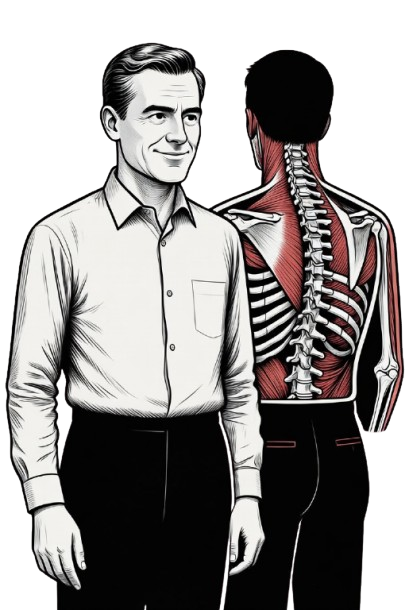
When the Plateau Is Actually a Pain Flare in Disguise
Some clients plateau because pain has crept back in, and they have quietly started protecting the area without telling anyone, including themselves. This is common and understandable. Nobody wants to admit the pain came back when they feel like they were supposed to be getting better.
Nelson's 1995 research followed 627 completers out of 895 chronic low back pain patients and found 76% reported excellent or good outcomes, with 94% of those good or excellent outcomes maintained at one year. That is a strong long-term picture, but it was not a smooth, uninterrupted climb for every person in that group. Recovery curves bend. They sometimes dip before they rise again. A client who is unconsciously guarding through a rep because of a flare is not failing the program. They are giving an honest signal that something needs to be addressed, whether that is Piezowave shockwave therapy for a flared trigger point, LED red light therapy at 660nm for inflammation, or simply a conversation about what changed in daily activity that week.
Ignoring that signal and pushing the weight stack anyway is how plateaus turn into setbacks.
What Actually Changes the Trajectory
In my own practice, of clients who arrived with spinal surgery already scheduled, 86.5% avoided surgery. That outcome was never the result of one unchanging protocol run on autopilot for months. It came from treating every plateau as data. When progress flattens, the question is never "why isn't this working anymore." The question is "what variable has not been adjusted." For a broader look at why this approach outperforms generic strength work when other methods have failed, see Why MedX Spinal Strengthening Works When Everything Else Has Failed.
Sometimes that means tightening pelvic stabilization. Sometimes it means adding LED red light therapy at 660nm to support tissue recovery between sessions. Sometimes it means backing off resistance for two weeks to let the slower adaptation phase catch up, which feels counterintuitive to a client who wants to see the number keep climbing. Sometimes it means admitting a flare happened and treating it directly instead of training through it.
A plateau is not the end of a strength curve. It is the point where generic programming runs out of answers and individualized adjustment has to take over. Clients who get stuck are rarely clients whose bodies stopped responding. They are clients whose program stopped evolving.
You don't have to live with this. Backs and necks can get stronger, pain can ease, and the body is more capable of recovery than most people are told. This blog is here to give you honest, practical information about what actually helps. As we learn more, we'll keep sharing what works. If something here spoke to you, that's a good reason to reach out and start the first conversation.
Trent Shuford, LMT, Cert. MedX Tech.