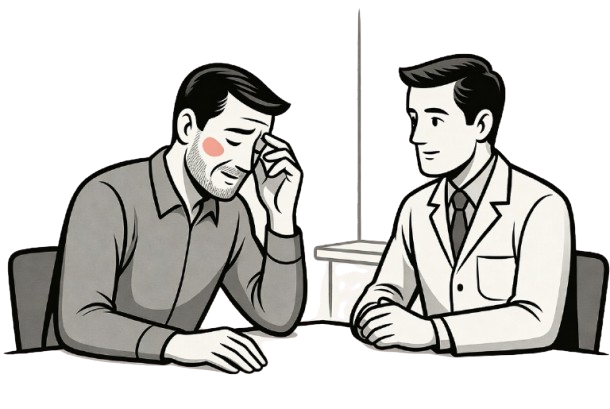

A client called me two days after her first MedX session, worried. Her low back felt tender, tight, almost bruised when she pressed on it. She thought something had gone wrong. Nothing had gone wrong. That was muscle soreness, and it meant the tissue had been asked to work harder than it was used to.
Three weeks later a different client called with a different sensation: a hot, electric line running from her hip down the outside of her calf into her foot. That was not soreness. That was a nerve signaling distress. Two clients, two calls, two completely different mechanical events happening under the skin, and most people cannot tell them apart until someone teaches them the difference.
This confusion is common, and it causes two opposite problems. Clients who feel normal post-session soreness sometimes panic and stop a rehabilitation program that was actually working. Clients who feel nerve involvement sometimes push through it because they assume it is "just soreness," and they make a mechanical problem worse. Both mistakes are avoidable once you understand what each sensation actually represents.
What Muscle Soreness Actually Is
Muscle soreness after MedX spinal strengthening or a manual therapy session is a mechanical fatigue response. The lumbar extensors, multifidus, and surrounding stabilizers have been loaded, often for the first time in years at that level of specificity. Microscopic strain in the muscle fibers triggers an inflammatory repair process. That process produces the familiar tenderness, stiffness, and dull ache that peaks 24 to 48 hours later and fades within a few days. This is part of why Why MedX Spinal Strengthening Works When Everything Else Has Failed, even when the early sessions feel uncomfortable.
Muscle soreness is symmetrical or broadly regional. It sits in the muscle belly, not along a line. Pressing on the sore area reproduces the same dull ache you already feel. Movement is stiff but the pain does not travel. Sitting, standing, and walking may all feel similarly uncomfortable rather than one position triggering something sharp.
This kind of soreness is not a warning sign. It is closer to what a first hard resistance workout does to a deconditioned muscle anywhere else in the body. In Pollock's 1989 study, healthy subjects training the lumbar extensors once weekly for ten weeks saw a 102% increase in strength at 0 degrees of lumbar flexion. That kind of adaptation does not happen without the muscle first being stressed past its comfort zone. Soreness, in that context, is evidence the muscle is adapting, not evidence of injury.
What Nerve Pain Actually Is
Nerve pain is a different mechanical event entirely. It usually means a nerve root is being compressed, irritated, or stretched somewhere along its path, most commonly where it exits the spine near a disc or a narrowed passage. The signal it produces does not stay where you loaded it. It travels.
Clients describe it as burning, electric, shooting, or like a hot wire. It often follows a specific path down one leg or one arm rather than sitting broadly across the low back or neck. It may come with numbness, tingling, or a sense that part of the limb feels different from the rest, colder, thicker, or less responsive. Coughing, sneezing, or straining can sharpen it because those actions increase pressure inside the spinal canal.
Nerve pain is asymmetrical almost by definition. It picks a side. It picks a path. It does not fade evenly the way muscle soreness does, and it often gets worse with certain positions rather than simply feeling stiff in all of them. If a client reports pain shooting past the knee, that is not a session response. That is a finding that needs to be evaluated before another session continues on the same plan.
Why the Two Get Confused
Both sensations show up in the same general area of the body, and both can appear after physical activity, which is where the confusion starts. A client who has never done structured spinal work before does not have a reference point for ordinary muscular fatigue. Everything hurts, and everything feels alarming, especially in the first two weeks of a new program.
The other source of confusion runs the opposite direction. Clients who have lived with chronic low back pain for years sometimes stop trusting their own body's signals altogether. They have felt some version of ache and burn together for so long that they lump every sensation into one undifferentiated category of "my back pain." This is especially true for clients dealing with The Psoas Muscle: The Hidden Driver of Chronic Low Back Pain, where deep referred pain can already blur the line between muscular and nerve sensation before a session ever happens. Teaching someone to separate soreness from nerve involvement is often the first time in years they have had language for what they are actually feeling.
This is why the distinction matters clinically, not just semantically. Nelson's 1995 study followed 627 chronic low back pain patients who completed a structured rehabilitation program, out of 895 who started, and found 76% excellent or good outcomes, with 94% of those good or excellent results maintained at one year. Programs like that only work when the client and clinician are both reading the body's signals accurately along the way. If soreness gets mistaken for nerve pain, clients quit progressive loading programs too early and lose the strength gains that were the point of the program. If nerve pain gets mistaken for soreness, clients keep loading a structure that needed to be examined first.
Still living around your pain?
Let's change that. Call us and describe what you're dealing with — we'll tell you honestly if we can help.
Call 425-758-4619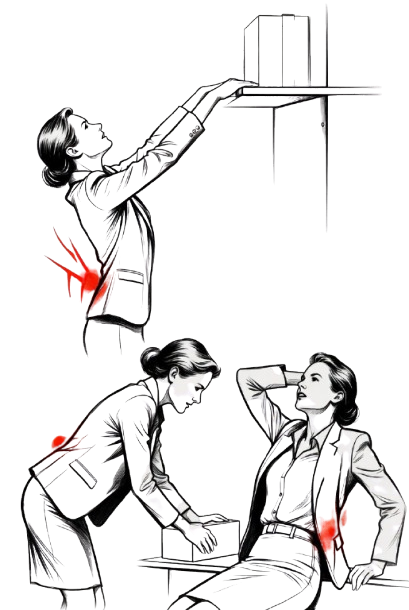
What Changes the Plan
When a client reports classic post-session soreness, the plan does not change. Manual and muscular therapy can address the tightness, and the next MedX session proceeds on schedule, often at the same load or a modest increase, because soreness is not a sign to back off. It is a sign the tissue is responding.
When a client reports symptoms that travel down a limb, follow a nerve distribution, or come with numbness or tingling, the plan changes immediately. That client needs a mechanical reassessment before continuing the strengthening progression. In some cases, spinal traction or decompression is the more appropriate next step, because it is designed to reduce pressure on the nerve root itself rather than build the strength of the muscles around it. Choi's 2005 study on post-discectomy patients found that structured rehabilitation preceded 87% return to work within four months, compared to 24% in a control group, but that result depended on identifying and addressing the nerve involvement correctly before the strengthening phase began, not after.
The Hard Truth About Waiting It Out
Most people wait to see if a sensation "goes away on its own" before calling anyone. With muscle soreness, that instinct is fine. It usually does resolve in two to three days regardless of what you do. With nerve pain, that same instinct can cost weeks. A nerve root that is compressed and ignored does not typically resolve faster because you stayed quiet about it. It resolves faster when the mechanical cause gets addressed.
The difference between these two sensations is not subtle once you know what to look for, but almost nobody is taught to look for it. Learning to read your own body's signals accurately, and knowing which sensation means keep going and which means call before your next session, is part of what makes a rehabilitation program actually work instead of just keeping you busy.
If a sensation after a session does not match the ordinary soreness pattern described above, that is worth a direct conversation rather than a guess. Call 425-758-4619 and describe exactly what you are feeling, where it is, and whether it travels. That description alone often tells us which direction the plan needs to go.
You don't have to live with this. Backs and necks can get stronger, pain can ease, and the body is more capable of recovery than most people are told. This blog is here to give you honest, practical information about what actually helps. As we learn more, we'll keep sharing what works. If something here spoke to you, that's a good reason to reach out and start the first conversation.
Trent Shuford, LMT, Cert. MedX Tech.