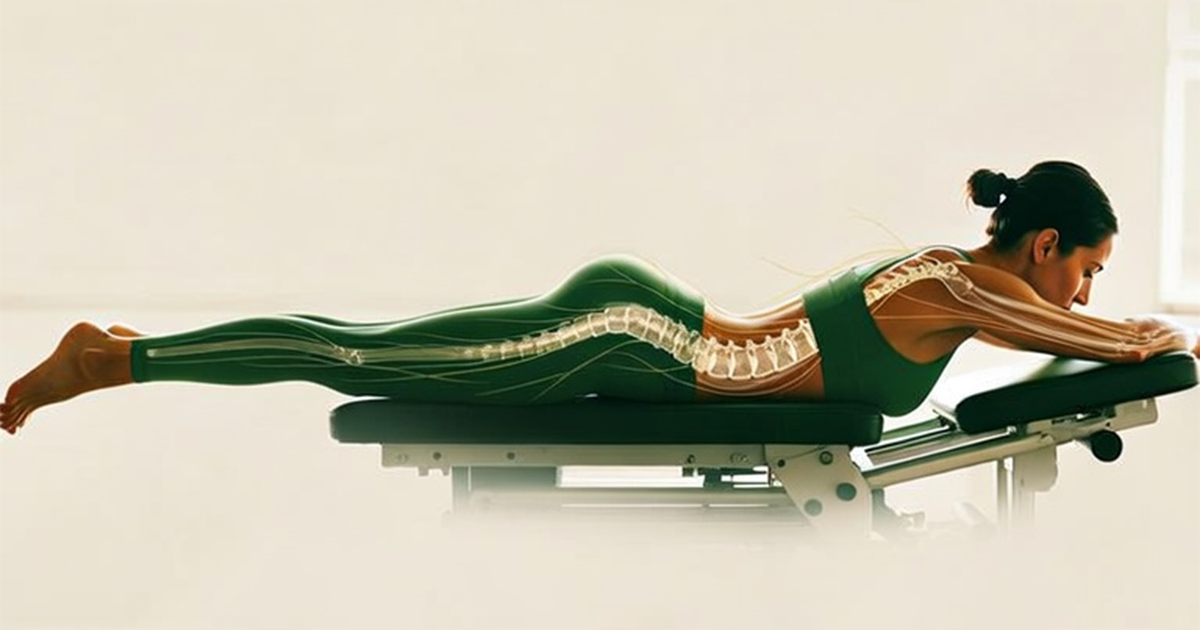

After a back injury, or years of chronic pain, the problem is often not only that a muscle is weak. It is that the muscle has stopped firing the way it should. The deep muscles that stabilize your spine go quiet, and the bigger, more superficial muscles take over to protect you. Getting out of pain is not just about building strength. It is about teaching the right muscles to switch back on at the right time. That retraining is what neuromuscular reeducation means.
What "firing wrong" actually looks like
Pain changes movement. When the low back hurts, the nervous system tends to dial down the small, deep stabilizers closest to the spine and lean on larger muscles to guard the area. In the short term that is protective. Over months and years it becomes a habit: the muscles built to control each segment of the spine stay underused, and the load shifts onto tissues that were never meant to carry it. Strength testing often confirms it. The deep extensors measure weak not only because they are small, but because they are barely being recruited.
The evidence that firing can be changed
This is measurable, and it responds to the right kind of work. In a 2005 study in the Journal of Strength and Conditioning Research, San Juan and colleagues recorded muscle activity during lumbar extension exercise performed with and without the pelvis stabilized. When the pelvis was locked down, activity in the lumbar multifidus, one of the key deep stabilizers, was 51 percent greater than when it was not. Same exercise, very different recruitment. Holding the pelvis still forced the deep muscle to do the work instead of letting the hips take over.
That change in recruitment is what drives change in strength. In a 1994 study in Archives of Physical Medicine and Rehabilitation, Graves and colleagues trained people once a week for twelve weeks. Isolated lumbar extension strength improved only in the group whose pelvis was stabilized, a 23.5 percent gain, while the group training without stabilization showed no meaningful change. When the right muscles fire, they get stronger. When they do not, the effort goes elsewhere and the deep muscles stay quiet.
Why general exercise usually is not enough
This is the part people find frustrating. You can be diligent, do your exercises, and still not get the deep stabilizers to re-engage, because in most movement the large muscles happily take over. Re-teaching the correct pattern takes work that isolates the target muscle and gives it no choice but to fire. That is why isolating the lumbar extensors is what makes strengthening work, and it is the same reason a general fitness routine can leave a chronic back problem unchanged. The issue was never effort. It was that the signal never reached the muscles that needed it.
It also helps explain why the source of stubborn pain is not always where it hurts. Sometimes a tight, overworked structure like the deep hip flexor behind a lot of chronic low back pain is part of the same faulty pattern, and the fix is to restore balance and correct recruitment, not just to push harder on the part that aches.
Recovery isn't a mystery.
It's a process. Let's start yours with a thorough assessment and an honest conversation about what's possible.
Call 425-758-4619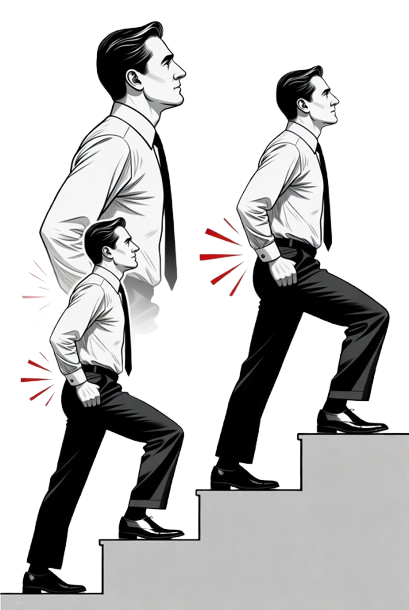
What this means for you
If you have done the stretching and the general strengthening and your back still is not right, the missing piece may be recruitment, not effort. Measured, isolated work can re-teach the deep muscles of your spine to fire correctly, and once they do, strength and control follow. It is a retraining process, and it is one of the most durable ways out of chronic pain.
If that sounds like your situation, the next step is a conversation. Call the office at 425-758-4619 and tell us what you are dealing with, and we will give you an honest read on whether this approach fits.
Trent Shuford, LMT, Cert. MedX Tech.