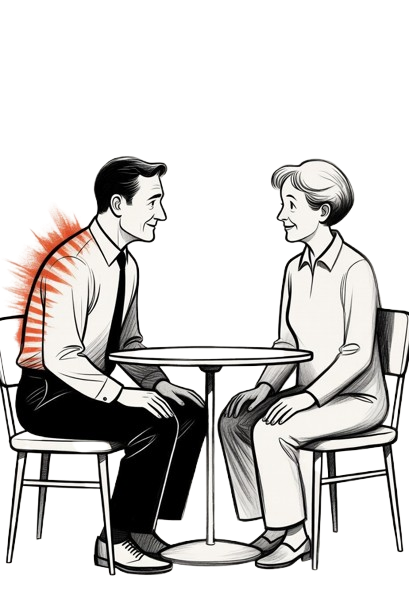

A client once sat down in my clinic with a list of medications and a worried look. He had been on warfarin for eight months after a cardiac event, and his previous massage therapist had refused to work on him at all. He had been told that blood thinners and manual therapy do not mix. That is not accurate, and the oversimplification does a disservice to people who need this care as much as anyone else.
The Misconception That Keeps Clients Away From Help
Many clients on anticoagulants, whether warfarin, a direct oral anticoagulant like apixaban, or even daily aspirin, hear the same thing: avoid massage, avoid deep tissue work, avoid anything that touches the muscles too firmly. Some providers simply decline to treat them. Blood thinners change how we work, not whether we work. A therapist who understands the mechanics of anticoagulation can adjust pressure, technique, and targeting to keep a client safe while still addressing the mechanical problem that brought them in.
The real issue is bruising and bleeding risk under the skin, not a universal prohibition. Deep, aggressive tissue work on a client with impaired clotting can produce bruising that is larger, slower to resolve, and occasionally uncomfortable. That is a legitimate concern. It is not a reason to abandon manual therapy altogether. It is a reason to modify it.
What Anticoagulants Actually Do to Soft Tissue
Blood thinners do not make tissue more fragile in a structural sense. Muscle fibers, fascia, and connective tissue are the same tissue whether or not a client takes warfarin. What changes is the vascular response when small capillaries are disrupted during manual work. A normal clotting cascade seals a ruptured capillary quickly, limiting the pool of blood that collects under the skin. On an anticoagulant, that cascade is slowed or partially blocked depending on the mechanism of the drug, so a minor capillary break that would normally resolve as a faint mark can spread into a larger bruise.
This matters most with techniques that rely on sustained, deep compression or friction, the kind that intentionally creates microtrauma to encourage tissue remodeling. It matters less with lighter manual techniques, joint mobilization, and most forms of spinal traction or decompression, none of which depend on deep compressive force against soft tissue to work. Knowing which modality does what mechanically is the difference between a therapist who refuses treatment out of caution and one who adapts it out of competence.
The Modalities That Need Adjustment, and the Ones That Do Not
MedX spinal strengthening and rehabilitation does not involve manual pressure on tissue at all. It is resistance-based strengthening of the lumbar or cervical extensors on specialized equipment, and anticoagulant status has no direct bearing on it beyond the standard precautions any strength training requires. Spinal traction and decompression likewise apply distraction forces through a harness system, not compressive hand pressure into muscle. Piezowave shockwave therapy and LED red light therapy at 660nm are not deep tissue techniques either, though Piezowave does use acoustic wave energy that a knowledgeable therapist should still account for on a case-by-case basis with a client on blood thinners.
Manual and muscular therapy is where adjustment actually happens. A therapist working with a client on anticoagulants should reduce sustained deep pressure, avoid aggressive friction techniques over areas with visible vasculature, and communicate with the client throughout the session about sensation and tenderness. This is not a downgrade in quality of care. It is a recalibration of technique to match the physiology in front of you.
35 years of hands-on clinical experience.
Ready to work on your problem. Call us and describe what you're dealing with.
Call 425-758-4619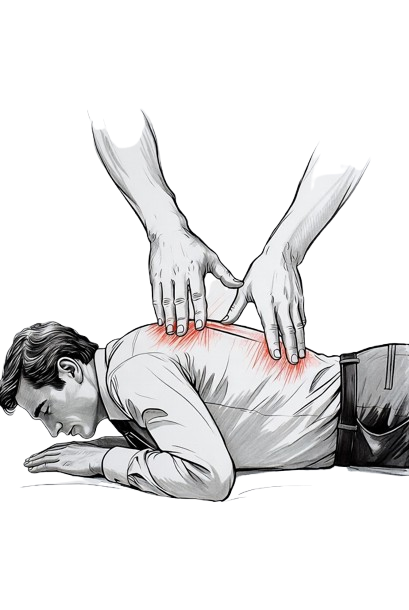
Why Communication With the Prescribing Physician Matters
Every client on a blood thinner is on it for a reason, and that reason tells a therapist something important. A client on aspirin for primary cardiovascular prevention is in a different risk category than a client on warfarin following a mechanical heart valve replacement or recent deep vein thrombosis. The dose, the drug class, and the underlying condition all shape how conservative the approach needs to be. This is exactly the kind of detail that belongs in a conversation between therapist and prescribing physician, not guesswork in the treatment room.
A responsible therapist asks, documents, and when there is any uncertainty, reaches out to the physician managing the anticoagulation. That communication is not a formality. It is part of the clinical reasoning that keeps a client safe without denying them care they need.
The Cost of Refusing Care Outright
When a therapist refuses to treat anyone on a blood thinner, the client does not stop having a mechanical back or neck problem. They simply go untreated, or they seek care from someone who did not ask the right questions in the first place. Neither outcome serves the client. A back injury does not pause because a medication complicates the treatment plan. The muscle imbalance, the degenerated disc, the restricted joint, all of it keeps progressing while the client sits on a waiting list for a provider willing to think it through.
The responsible path is not refusal. It is informed modification, built on understanding what each modality actually does to tissue and matching that understanding to the client's specific anticoagulant, dose, and medical history. Clients deserve a therapist who can tell the difference.
You don't have to live with this. Backs and necks can get stronger, pain can ease, and the body is more capable of recovery than most people are told. This blog is here to give you honest, practical information about what actually helps. As we learn more, we'll keep sharing what works. If something here spoke to you, that's a good reason to reach out and start the first conversation.
Trent Shuford, LMT, Cert. MedX Tech.