
Breath-Holding During MedX Exercise
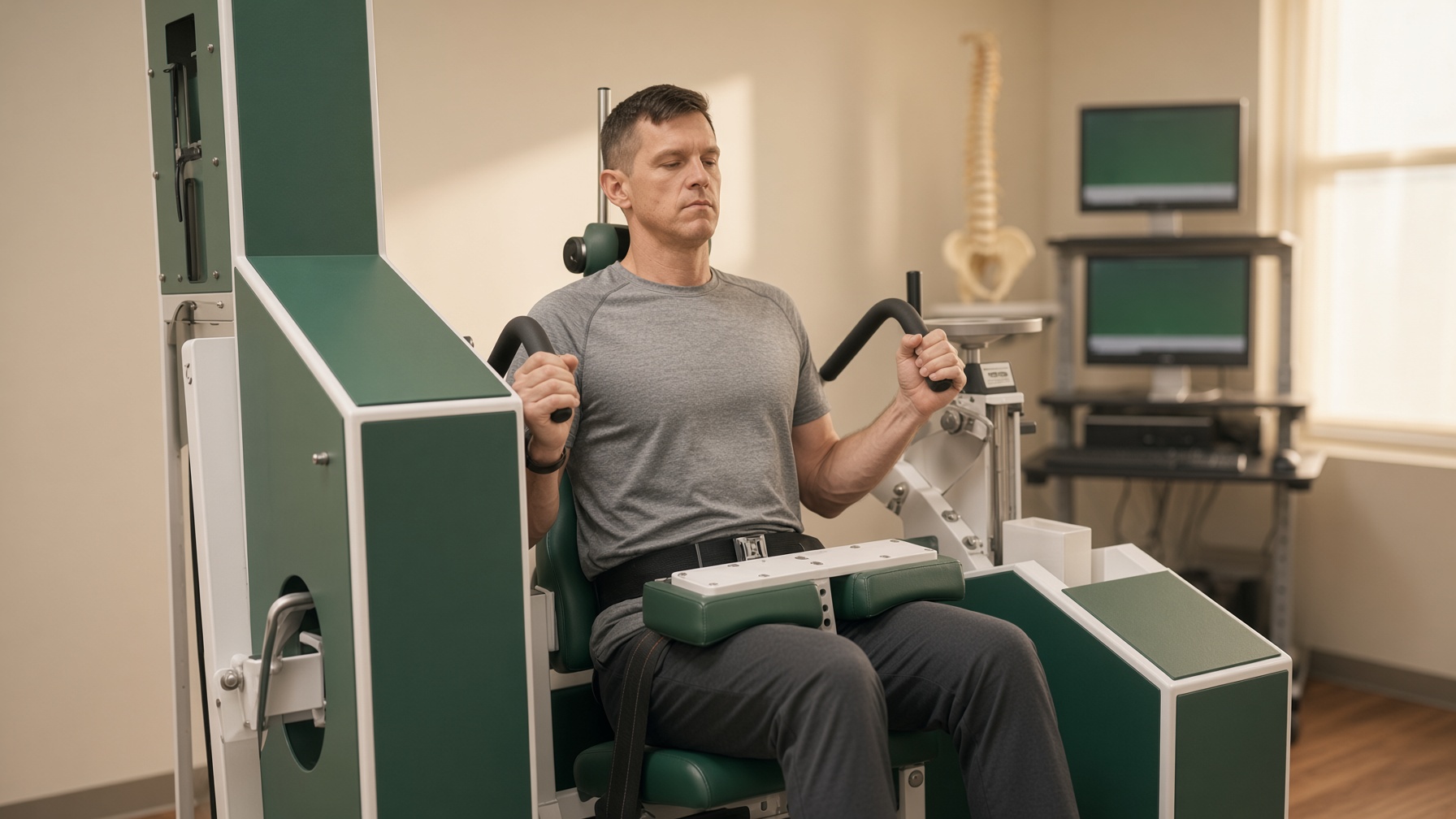
A client gets positioned in the MedX lumbar extension machine, sets up for a rep, and without thinking about it, locks the air in their chest and pushes. The rep looks strong. The number on the readout looks good. But something is working against the exercise instead of for it, and most clients have no idea it is happening.
Breath-holding during resistance work is common enough that it has a name, the Valsalva maneuver, and there is a popular idea floating around gyms and rehab clinics that holding your breath is how you "brace" for a heavy lift. For general strength training with a healthy spine, that idea has some defenders. For a client who is on the MedX machine specifically because their lumbar extensors are weak, inhibited, or recovering from pain, it is the wrong instruction, and I correct it in nearly every first session.
The Mechanical Problem
Here is the mechanical problem. When you hold your breath against a closed airway and push, intrathoracic and intra-abdominal pressure spike. That pressure spike does stiffen the trunk, briefly, which is why people feel like they can push harder. But it also drives blood pressure up sharply, can leave a client lightheaded when they finally exhale, and it disconnects the deep stabilizing breath from the rep itself. The MedX protocol depends on isolated lumbar extension, controlled through a full range of motion, with the pelvis stabilized and the movement happening slowly enough that the muscle, not momentum, is doing the work. Breath-holding fights that. It recruits the Valsalva pressure system instead of the targeted lumbar extensors, and it makes the rep look like strength when part of what the client is producing is just pressure.
Why This Matters for Pain-Driven Clients
There is also a simpler reason this matters for pain-driven clients. A spine already guarding against pain tends to brace globally. The whole trunk stiffens, the breath stops, and the deep multifidus and erector groups that the MedX machine is designed to isolate get less of the work because the global bracing pattern is doing the job instead. That is the opposite of what rehabilitation needs. San Juan's 2005 study found multifidus EMG activity was 51% greater when pelvic stabilization was used correctly during lumbar extension testing, and pelvic stabilization only works as intended when the trunk is not simultaneously locked down by held breath. You cannot isolate what you refuse to let move independently, and a held breath is one more thing moving independently of the target muscle.
Most people have never trained the muscles that actually support the spine.
You can. MedX isolates and strengthens the deep spinal extensors that conventional exercise can't reach.
Call 425-758-4619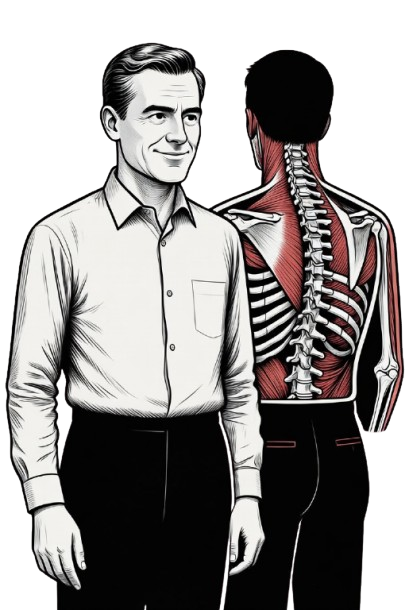
The Breathing Instruction That Works
The instruction I give is plain: exhale through the effort phase of the rep, inhale on the return. Not a forced or dramatic exhale, just a steady release of air timed to the extension. It feels unnatural for the first several reps to most clients, especially anyone who has lifted weights elsewhere and learned to brace by holding air. Within a session or two it becomes automatic, and clients often report the rep actually feels harder in the target muscle once the breath-holding habit drops away, because the lumbar extensors are finally doing the work the pressure spike was doing for them before.
This is not a minor coaching cue. Pollock's 1989 research documented a 102% increase in lumbar extensor strength at zero degrees of flexion over ten weeks of once-weekly MedX training in healthy subjects, and that kind of isolated gain depends on the targeted muscle actually bearing the load, rep after rep, without a pressure-based shortcut substituting for it. A client who breath-holds through every session is training a global bracing reflex, not the isolated lumbar extensor strength the machine is built to produce. The equipment can only do its job if the person operating it lets the muscle, not the breath, carry the rep.
A Safety Issue, Not Just a Technique Issue
Clients recovering from injury or surgery have an added reason to care. Blood pressure spikes from repeated Valsalva maneuvers are an unnecessary cardiovascular load layered onto a rehabilitation session that is supposed to be building capacity, not testing it. For older clients or anyone with existing blood pressure concerns, this is not a trivial detail. It is a basic safety matter that gets ignored because breath-holding under load feels instinctive and nobody mentions otherwise.
The honest truth is that most clients walk into their first MedX session having never been told how to breathe through resistance work correctly, because most strength training environments never address it at all. Fixing that one habit does not require new equipment or more sessions. It requires someone watching closely enough to catch it and correct it before it becomes the pattern the client's spine learns to rely on.
You don't have to live with this. Backs and necks can get stronger, pain can ease, and the body is more capable of recovery than most people are told. This blog is here to give you honest, practical information about what actually helps. As we learn more, we'll keep sharing what works. If something here spoke to you, that's a good reason to reach out and start the first conversation.
Trent Shuford, LMT, Cert. MedX Tech.