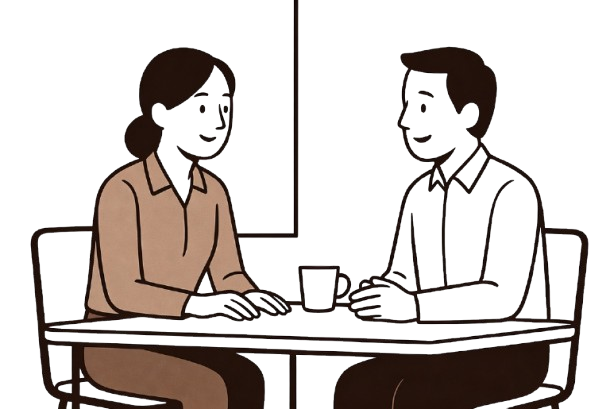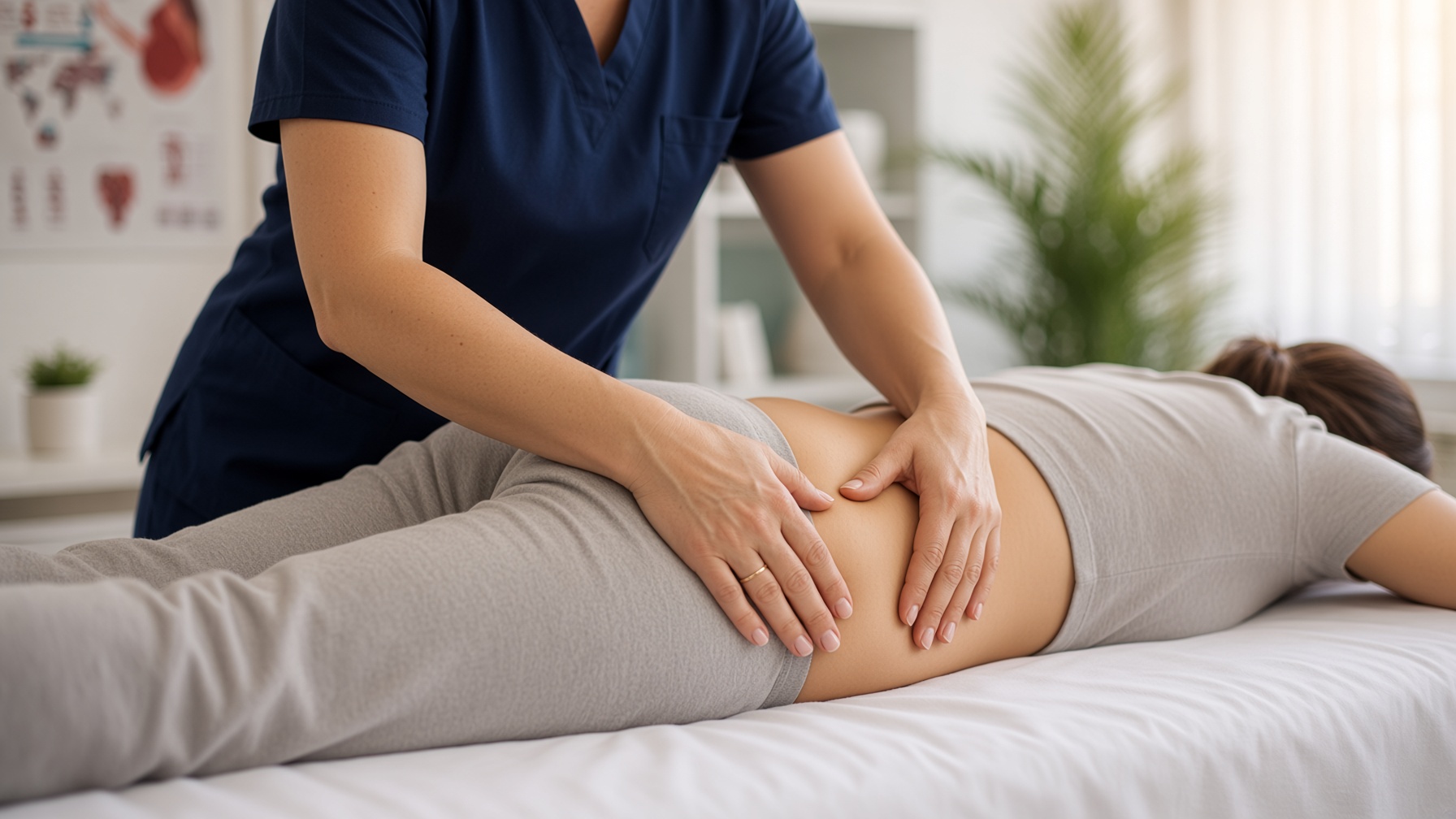

A woman came into the clinic last year who could fold flat over her straight legs, palms on the floor, and still said her low back felt like it was "stuck." She had been stretching every morning for three years. More hamstring stretches, more cat-cow, more foam rolling. Her back pain had not improved. It had gotten worse.
This is one of the more confusing presentations I see, and it catches a lot of well-meaning clients off guard. The instinct with back pain is almost always the same: something feels tight, so stretch it. But hypermobile joints are not tight. They are unstable. And stretching an unstable joint is like loosening the lug nuts on a wheel that is already wobbling.
Hypermobility Is a Control Problem, Not a Flexibility Problem
Hypermobility means the joint has more range of motion than the surrounding soft tissue and neuromuscular system can control. The spine is a stacked column of vertebrae held in alignment by ligaments, discs, and muscle. In a hypermobile person, the ligaments and joint capsules allow excess movement at one or more segments before the muscles catch it.
The brain senses this. Proprioceptive feedback from an unstable segment is noisy and unreliable, so the nervous system responds the way it responds to any threat: it tightens things up. That tightness a hypermobile client feels is very often protective guarding layered on top of an unstable joint, not a short muscle that needs lengthening.
Stretch into that guarding and you get temporary relief, sometimes for an hour, sometimes for a day. Then the segment moves again without control, the nervous system clamps down again, and the person returns to stretching. The cycle repeats, and the segment never gets stronger or more stable. It just gets more irritated.
Why More Flexibility Makes a Hypermobile Spine Worse
The lumbar spine was never built to move through its full available range under load, over and over, for a hypermobile person. Every additional degree of motion gained through stretching is a degree the muscular system has to control with less structural backup from the ligaments. For a person with normal tissue tension, that tradeoff is manageable. For a person who is already hypermobile, it is not.
I have watched clients who were diagnosed with "tight" backs by well-meaning practitioners get worse with every round of mobility work. The pattern is consistent. Pain improves briefly after stretching, then returns at the same or a slightly worse level within a day or two. Over months, the baseline pain creeps up. The joint keeps gaining range it cannot control, and the muscles around it keep tightening in response, because tightening is the only tool the nervous system has left.
This is the part that surprises people: a hypermobile spine does not need permission to move more. It needs a reason to trust that it will not be asked to move more than it can stabilize.
What Stability Training Does That Stretching Cannot
Isolated lumbar strengthening changes the equation because it builds the muscular control the ligaments are not providing. Graves and colleagues found that isolated lumbar extension strength improved by 23.5% when the pelvis was stabilized during testing and training, versus a 1.2% decline when it was not [VERIFIED PMID 8311680]. The stabilization is not incidental. It is the mechanism. When the pelvis is locked in place, the lumbar extensors are forced to do the work instead of compensating through hip and pelvic motion, which is exactly the compensation pattern a hypermobile spine tends to default to.
San Juan and colleagues measured this at the muscle level and found multifidus activation was 51% greater with pelvic stabilization than without [VERIFIED PMID 16287377]. The multifidus is the small, deep muscle that controls segment-to-segment motion in the lumbar spine, the exact job that ligaments are failing to do in a hypermobile joint. You cannot stretch your way into better multifidus recruitment. You load it, under control, through a limited and appropriate range, and it adapts.
This is also why generic core workouts tend to disappoint hypermobile clients the same way stretching does. A plank or a bird-dog trains global stability, which matters, but it does not isolate and load the deep segmental stabilizers at the specific joint that is failing. Without pelvic stabilization and a machine that isolates the lumbar segment, the bigger, more dominant muscles take over the work again, and the unstable segment stays unprotected.
Still living around your pain?
Let's change that. Call us and describe what you're dealing with — we'll tell you honestly if we can help.
Call 425-758-4619
Why Pain Relief Without Strength Gain Does Not Hold
Manual therapy, traction, and Piezowave shockwave therapy all have a real role here, and I use them often with hypermobile clients. They calm the guarded tissue, reduce the nervous system's alarm response, and create a window where movement feels safer. But that window closes if nothing fills it. Pollock and colleagues documented a 102% increase in lumbar extensor strength at 0 degrees over 10 weeks of once-weekly training in healthy subjects [VERIFIED PMID 2532867], a strength gain finding, not a patient pain outcome, but it illustrates how quickly isolated lumbar musculature can adapt when it is loaded correctly. That is the adaptation a hypermobile spine actually needs. Calm tissue that stays unstrengthened just goes back to guarding the first time it is asked to do something unsupported.
Nelson and colleagues followed 895 chronic low back pain patients in a structured lumbar extension strengthening program, of whom 627 completed it; 76% of completers reported excellent or good outcomes, and 94% of those good or excellent outcomes were maintained at one-year follow-up [VERIFIED PMID 8584467]. That durability matters specifically for hypermobile clients, because the pattern they are usually stuck in is short-lived relief that never holds. A program built around actual strength gain, not just symptom reduction, is what breaks that cycle.
Reading the Difference Between Tight and Unstable
The clinical distinction is not always obvious from the outside, and I would rather a client ask than guess. A joint that is truly short and tight responds to stretching with lasting improvement in range and a reduction in the guarding sensation over days, not hours. A joint that is hypermobile and guarded responds to stretching with brief relief that fades fast and sometimes returns worse, because the stretch just asked an already-excessive range to go further.
If stretching has become a daily requirement just to feel normal, and the relief never lasts, the issue usually is not tightness. It is instability wearing a tight disguise. No amount of additional range is going to fix a joint that cannot control the range it already has.
You don't have to live with this. Backs and necks can get stronger, pain can ease, and the body is more capable of recovery than most people are told. This blog is here to give you honest, practical information about what actually helps. As we learn more, we'll keep sharing what works. If something here spoke to you, that's a good reason to reach out and start the first conversation.
Trent Shuford, LMT, Cert. MedX Tech.