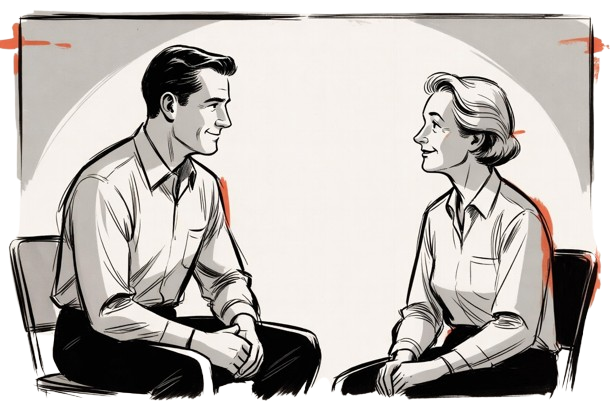

A client came in last month convinced he had arthritis settling into his spine. He was 42. He woke up every morning feeling like his low back had turned to concrete, loosening only after twenty minutes of moving around the kitchen. His primary care doctor had floated the word "arthritis" without imaging, without a referral, just a passing comment at the end of a physical. He had spent four months assuming his spine was aging badly. It was not arthritis. It was disc hydration and deconditioned stabilizer muscles, and those are two very different problems with two very different fixes.
Morning stiffness gets blamed on arthritis more than almost any other back symptom, and much of the time that blame is misplaced. Arthritis is a real and verifiable diagnosis made through imaging and clinical exam. Morning stiffness, on the other hand, is a mechanical event that happens to nearly everyone with a spine, arthritic or not. Understanding the mechanism changes what you do about it.
What Actually Happens to Your Spine Overnight During Morning Stiffness
Your intervertebral discs are not static cushions. They are hydraulic structures that absorb fluid overnight when you are horizontal and relieved of gravitational load, then slowly lose that fluid through the day as you sit, stand, and move. By morning, your discs are at their most swollen and least compressible point in the 24 hour cycle. That swelling increases pressure on surrounding ligaments and joint capsules, and it reduces the segmental mobility of your spine for the first hour or so after waking.
This is not degeneration. It is fluid dynamics. A spine with healthy discs and a spine with worn discs both go through this cycle, which is one reason stiffness alone cannot diagnose arthritis. The discs plump up, the joints feel locked, and the first few movements of the day feel stiff and guarded. Then the fluid redistributes, the tissue warms, and the stiffness fades. If that fading reliably happens within thirty to sixty minutes, you are looking at a hydration and mobility pattern, not a destructive joint disease.
Arthritic stiffness behaves differently. It tends to persist longer, often more than an hour, and it tends to track with other signs: joint space narrowing on imaging, morning stiffness that has been slowly worsening over years rather than months, and often stiffness in multiple joints, not just the low back. Mechanical morning stiffness, by contrast, is frequently worse after a day of heavy sitting, improves with movement, and can show up suddenly after a period of reduced activity rather than building gradually over a decade.
The Deconditioning Piece Nobody Mentions
Disc hydration explains part of the picture, but it does not explain why some people wake up stiff for ninety minutes and others are moving freely in ten. The difference usually comes down to the strength and endurance of the muscles that stabilize the lumbar spine, specifically the multifidus and the deeper erector spinae fibers that run segment to segment.
When those muscles are deconditioned, which is common after years of sitting, intermittent exercise, or previous injury, the spine has less active support to manage the overnight fluid shift. The ligaments and joint capsules end up doing work they were not built to do alone, and the result is stiffness that lingers because nothing is actively helping the segments glide past each other as the discs lose their overnight fluid load. A well-conditioned stabilizing system clears that stiffness faster because it is actively moving the joints through their range rather than waiting for passive mobility to return on its own. Why Core Workouts Alone Will Not Fix Your Back Pain is worth reading if you have already tried generic core exercises and still wake up stiff, because the stabilizers that matter most here are not the ones most core routines train.
This is where the arthritis assumption becomes a problem. If you assume your spine is simply aging and there is nothing to be done, you stop moving in the morning, you stop strengthening the muscles that would clear the stiffness faster, and you create exactly the deconditioning that makes the next morning worse. The label becomes self-fulfilling even when it was never accurate to begin with.
Why Imaging Alone Does Not Settle It
Here is a detail that surprises most people: imaging frequently shows degenerative changes in spines that have no pain and no notable stiffness, and plenty of people with genuinely stiff, difficult mornings have unremarkable scans. Disc desiccation and mild facet changes show up on MRI in a large percentage of pain-free adults by middle age. A scan showing "mild degenerative changes" is not the same as a diagnosis explaining your symptom. It is a static picture of a dynamic structure, taken at one moment, that cannot by itself tell you why you are stiff for 45 minutes every morning and your neighbor with a similar scan is not.
This matters practically because it means the imaging report you were handed does not settle the question. The question is better answered by how your stiffness behaves: how long it lasts, what makes it worse, what makes it better, and whether it is isolated to the spine or shows up in multiple joints with other systemic signs. A careful clinical exam, not a passing comment at the end of an unrelated appointment, is what actually distinguishes a mechanical pattern from an arthritic one.
Still living around your pain?
Let's change that. Call us and describe what you're dealing with — we'll tell you honestly if we can help.
Call 425-758-4619
What Rebuilding the Support System Looks Like
Once the mechanism is accurate, mechanical stiffness, not arthritis, the path forward is specific. Why MedX Spinal Strengthening Works When Everything Else Has Failed explains the full picture, but the short version starts here: isolated lumbar strengthening on MedX equipment has been shown to increase lumbar extensor strength at 0 degrees by 102% over 10 weeks with training sessions once a week, a finding from Pollock's 1989 research in healthy subjects measuring strength gain, not a pain outcome specifically, but it demonstrates how quickly the spine's support musculature responds when isolated properly. Graves' 1994 work found that isolated lumbar strength improved by 23.5% only when pelvic stabilization was used during testing and training, compared to a 1.2% decline without it. The pelvis has to be fixed in place for the lumbar muscles to be isolated and trained effectively, otherwise the hip muscles compensate and the lumbar stabilizers stay weak.
San Juan's 2005 research found multifidus EMG activity 51% greater with pelvic stabilization than without. The multifidus is precisely the muscle group responsible for clearing morning stiffness faster by actively moving spinal segments through range as the discs redistribute fluid. Strengthening it is not a vague wellness goal. It is a direct mechanical intervention aimed at the exact muscle group that governs how long your mornings feel stuck.
Manual and muscular therapy addresses the softer tissue around the joints, the fascia and muscle guarding that accumulates when someone has been moving carefully for months out of fear that their "arthritis" is getting worse. Spinal traction and decompression can reduce the compressive load on irritated segments and support the fluid exchange process rather than fighting it. None of these modalities require you to have a clean diagnosis of arthritis or not. They work on the mechanical reality in front of them.
The Cost of the Wrong Label
The client I mentioned at the start spent four months limiting his activity, assuming any backache meant his arthritis was progressing. He avoided his morning walk. He stopped lifting anything heavier than a grocery bag. Every one of those choices deconditioned his lumbar stabilizers further, which made his mornings worse, which confirmed his fear that his spine was deteriorating. None of it was arthritis. It was a downward spiral built entirely on an inaccurate assumption, and it took longer to unwind than it would have taken to simply strengthen the muscles correctly from the start.
A misdiagnosis does not have to come from a bad doctor. It can come from a passing comment nobody bothered to verify, repeated back to yourself every morning until it becomes the explanation for everything. Stiffness is a symptom, not a diagnosis. Treating it as a mechanical problem that responds to targeted strengthening, manual work, and proper spinal mechanics gets most people moving faster in the morning than waiting for an arthritis diagnosis to be confirmed or denied ever will.
You don't have to live with this. Backs and necks can get stronger, pain can ease, and the body is more capable of recovery than most people are told. This blog is here to give you honest, practical information about what actually helps. As we learn more, we'll keep sharing what works. If something here spoke to you, that's a good reason to reach out and start the first conversation.
Trent Shuford, LMT, Cert. MedX Tech.