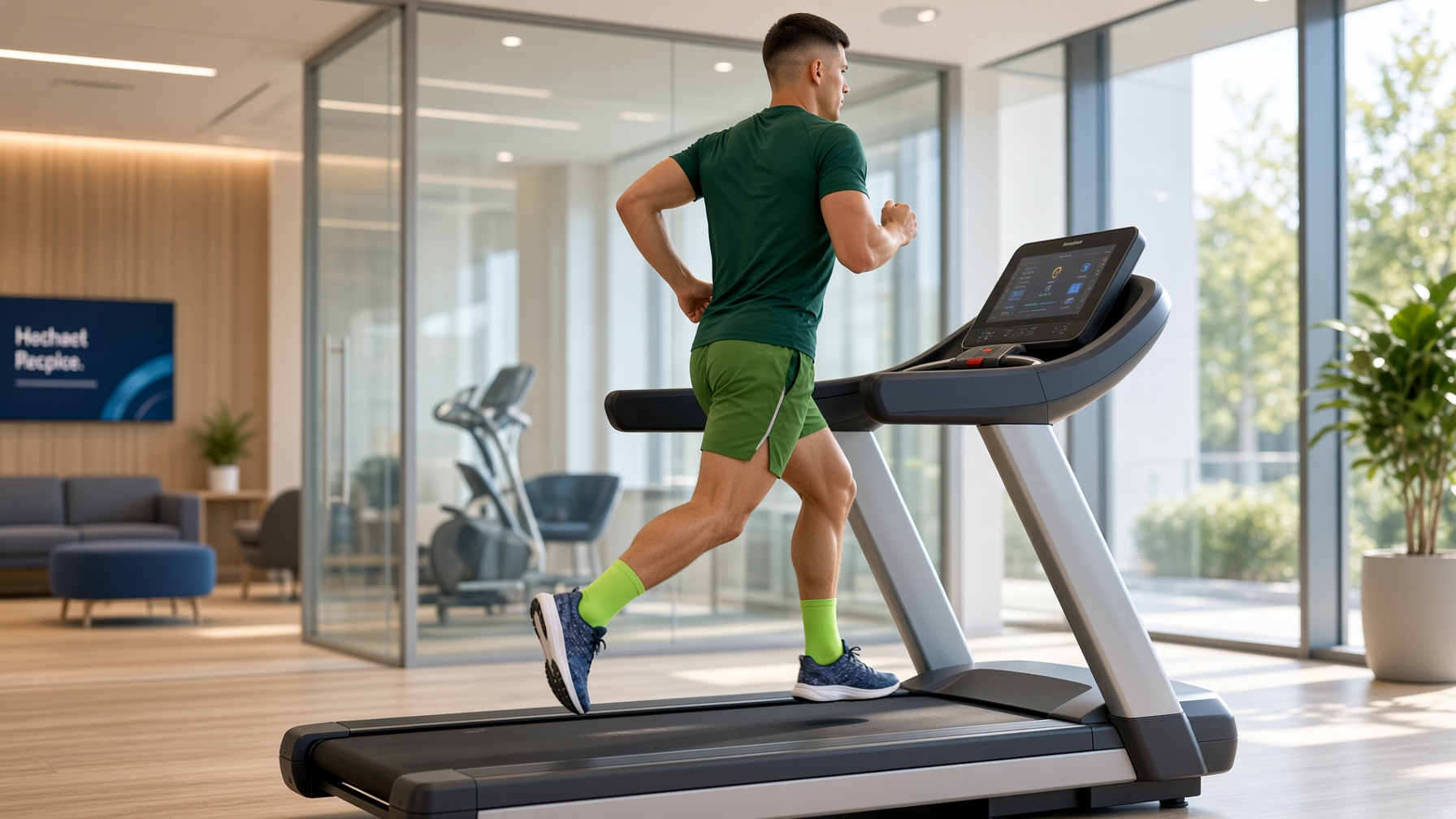

A runner sits across from me and tells me the same thing almost every week. The pain is gone. Treatment worked. But the first time back on the road, something tightens up by mile two and the whole thing falls apart again. This is not a failure of treatment. It is a failure of the plan between treatment and returning to running.
Most clinics stop at pain relief. Manual work loosens the tissue, maybe some stretching homework gets handed over, and the runner is told to "ease back in." That phrase does a lot of damage. Easing back in with no structure is how a healed back gets re-injured, because running is not a gentle activity. Each foot strike sends load through the spine at multiples of body weight, repeated thousands of times over a single run. A spine that feels fine standing in a treatment room has not been tested against that.
Why Pain-Free Is Not the Same as Load-Ready
Pain is a poor messenger. It can disappear long before the deep stabilizing muscles around the spine have recovered real capacity, and it can also persist in tissue that has already regained plenty of strength. Relying on pain as the only gauge of readiness is why so many runners reinjure themselves within weeks of feeling good.
What matters more is tolerance: how much repeated load the spine's stabilizing structures can absorb before they fatigue and let compensatory patterns creep back in. Running does not ask the spine to produce one big effort. It asks for thousands of small, repeated efforts to hold position under impact. That is a strength and endurance question, not just a flexibility or pain question. A back can feel completely normal at rest and still not have the tolerance for mile six.
Isolating the Spine Instead of Guessing With the Core
A lot of runners get sent to generic core training after a back injury and are surprised when it does not transfer to the road. The reason is mechanical. In a 1994 study, Graves found that isolated lumbar extensor strength improved by 23.5% only when the pelvis was stabilized during testing and training; without pelvic stabilization, strength actually dropped by 1.2% [VERIFIED PMID 8311680]. Generic core work recruits the hip flexors, the obliques, and a dozen compensating muscles before it ever reaches the small stabilizers along the spine itself. Those are exactly the muscles that absorb impact while running.
This is why MedX spinal strengthening uses pelvic stabilization as a non-negotiable part of the setup. San Juan's 2005 research found multifidus activation was 51% greater when pelvic stabilization was used during lumbar extension exercise compared to without it [VERIFIED PMID 16287377]. The multifidus is one of the primary stabilizers working with every stride a runner takes. If it is not trained directly, it does not get stronger just because the runner feels better.
What Progressive Loading for Returning to Running Actually Looks Like
Rebuilding tolerance is not about adding mileage and hoping the back keeps up. It is about layering load in a sequence the spine can actually adapt to.
The sequence that works starts with isolated spinal strengthening on a MedX unit, where resistance is applied directly to the lumbar extensors through a full, measured range of motion with the pelvis locked in place. Pollock's 1989 research found this type of training produced a 102% increase in lumbar extensor strength at zero degrees within ten weeks, training only once per week, in healthy subjects, measuring strength and not a pain outcome [VERIFIED PMID 2532867]. That is strength gain data, not proof it eliminates running pain. It establishes the baseline from which load tolerance for running has to be built.
From there, walking intervals come before jogging intervals. Jogging intervals come before continuous running. Hills, speed work, and trail terrain come last, because they add rotational and uneven loading that a newly rehabilitated spine has not been tested against yet. Skipping steps in this sequence is the single most common reason runners cycle back into my office a second time.
Still living around your pain?
Let's change that. Call us and describe what you're dealing with — we'll tell you honestly if we can help.
Call 425-758-4619
Manual Therapy's Role Once Mileage Increases
As mileage climbs, new tissue tightness shows up that was not present at lower loads. This is normal and expected, not a sign that the rehab failed. Manual and muscular therapy addresses the adhesions and restricted tissue that accumulate from increased training volume, keeping the muscles around the spine moving freely enough that they can keep doing their stabilizing job instead of guarding and compensating.
Piezowave shockwave therapy becomes useful here too, particularly for runners dealing with chronic tendon or fascial involvement that flares under higher mileage. It is not a substitute for the strengthening work. It is a tool for the tissue complications that show up once real training load returns.
The Work Nobody Wants to Hear
Runners want a date. They want to know exactly when they can run their old route again without thinking about their back. I cannot give an exact date, because tolerance is built through measured progression, not time passing. What I can tell you is that runners who follow a structured return, built on actual strength data from spinal testing rather than how they feel on a given morning, do not end up back in a treatment room explaining that the pain crept back after mile three. The ones who skip that structure usually do.
You don't have to live with this. Backs and necks can get stronger, pain can ease, and the body is more capable of recovery than most people are told. This blog is here to give you honest, practical information about what actually helps. As we learn more, we'll keep sharing what works. If something here spoke to you, that's a good reason to reach out and start the first conversation.
Trent Shuford, LMT, Cert. MedX Tech.